


Non-contact IV tester

Quantum Efficiency Tester
PL/EL Integrated System
PV-Reflectumeter
3D Confocal Microscope
In-Line Four Point Probe Tester
Four Point Probe Tester
In-Line Thin Film Thickness Tester
Raman Spectrometer
FTIR Spectrometer
Spectrophotometer
Automatic Spectroscopic Ellipsometer
Contact Resistance Tester
Ultra depth of field 3D microscope
Auto Visual Tester
VMM PV Vision Measuring Machine
Solar Cell Horizontal Tensile Tester
Steady State Solar Simulator for Solar Cell
Solar Cell UV Aging Test Chamber
Solar Cell Comprehensive Tensile Tester
Visual Inspection Tester
Wet Leakage Current Tester
PV Module EL Tester
PV Module UV Preconditioning Chamber
Steady State Solar Simulator for PV Module
Current Continuous Monitor
Potential Induced Degradation Test
Bypass Diode Tester
LeTID Test System
Reverse Current Overload Tester
Impulse Voltage Tester
Hipot Insulation Tester
Ground Continuity Tester
Hipot Insulation Ground Tester
Damp Heat Test Chamber
Humidity Freeze Test
Thermal Cycle Test Chamber
Dynamic Mechanical Load Tester
Static Mechanical Load Tester
Hail Impact Tester
Robustness of Termination Tester
Module Breakage Tester
Cut Susceptibility Tester
Peel Shear Strength Tester
Universal Testing Machine (Single-arm)
Universal Testing Machine (Double-arm)
Glass Transmittance Tester
Acetic Acid Test Chamber
EVA Degree of Crosslinking Test System
Junction Box Comprehensive Tester
Drop ball tester
Semi-automatic scanning four-probe tester
Stylus Profilometer
Maximum Power Point Tracker
Perovskite Glass Transmittance Tester
Perovskite P1 Laser Scribing Multifunctional Testing Machine
Perovskite Online PL Tester
Perovskite Online Sheet Resistance Tester
Online Perovskite Film Thickness Tester
Perovskite Process Inspection Workstation
Portable EL Tester
Portable Thermal Imaging Tester
Solar Module Multi-Channel Testing System
PV Inverter Power Quality Tester
IV Tester
IVEL Cell Sorting Machine
Influence of Resistivity and Light Transmittance of TCO Thin Film on SHJ Cell Efficiency
Date : 19 September 2023Views : 1850
In the full range of sunlight luminescence (300~2500nm), its energy in the visible light range (400~760nm) accounts for 43%, the energy in the ultraviolet region (<400nm) accounts for 5%, and the energy in the near infrared region (>760nm), the energy accounted for 52% of the total energy. At present, Millennial spectrophotometer can fully meet the needs of collecting reflecta and transmittance data of ito thin films in the full band of 190-2800nm, and is widely used in the photovoltaic industry.

TCO Film
Low resistivity, high light transmittance, and low-temperature growth are the basic requirements for TCO thin films for SHJ cells. The high infrared reflectivity of traditional TCO films limits the effective utilization of long-wavelength sunlight energy by solar cells using it as a transparent electrode.
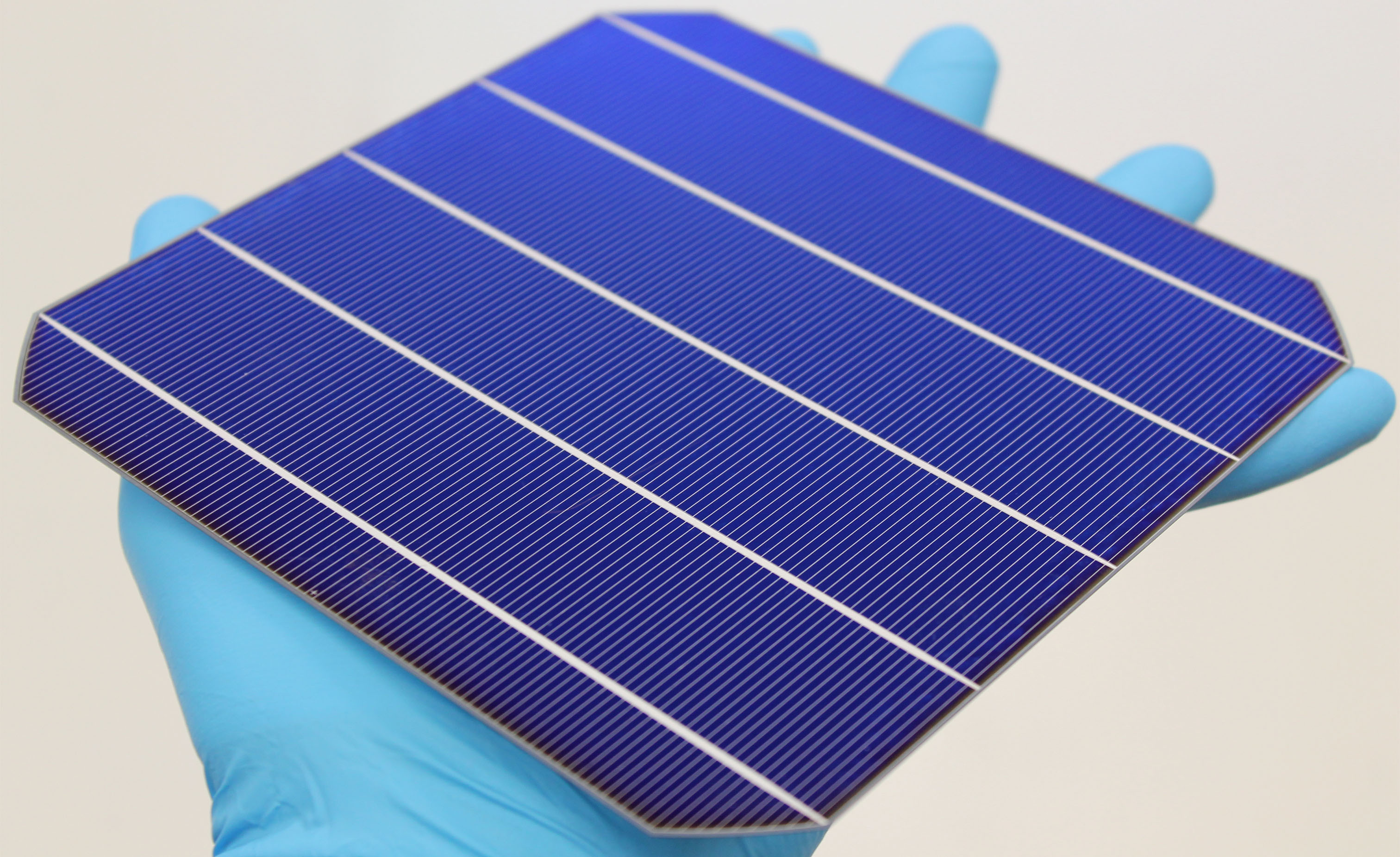
The resistivity of the TCO film is inversely proportional to the carrier concentration and mobility. By reducing the carrier concentration, the absorption of free carriers can be reduced, thereby improving the light transmittance, but reducing the carrier concentration will lead to a decrease in the resistivity of the film. rise to affect conductivity.If the carrier mobility is increased while reducing the carrier concentration, on the one hand, due to the reduced carrier concentration and reduced absorption, high transmittance from visible light to near-infrared range can be achieved, which is conducive to the improvement of solar cell efficiency.
Improve TCO Carrier Mobility
There are many ways to improve the carrier mobility of TCO thin films, including selecting the appropriate deposition method, annealing heat treatment after deposition, controlling the crystal structure, controlling the impurity concentration, selecting the doping method, introducing hydrogen, and selecting the appropriate dopant etc. ITO thin films are widely used in SHJ cells due to their advantages of low resistivity, high visible light transmittance and low temperature deposition (≤200°C). However, the traditional ITO carrier mobility is relatively low, which is determined by the scattering mechanism such as ionized impurity scattering. Doping the In₂O₃ system with the following dopants can obtain In₂O₃-based TCO films with high mobility:
■ Hydrogen-doped In₂O₃ (IO:H)
■ Tungsten-doped In₂O₃ (IWO)
Although these two In₂O₃-based TCO films have superior properties to ITO films, the deposition temperature is generally higher than 250°C, and further optimization is required if they are to be applied to SHJ batteries.
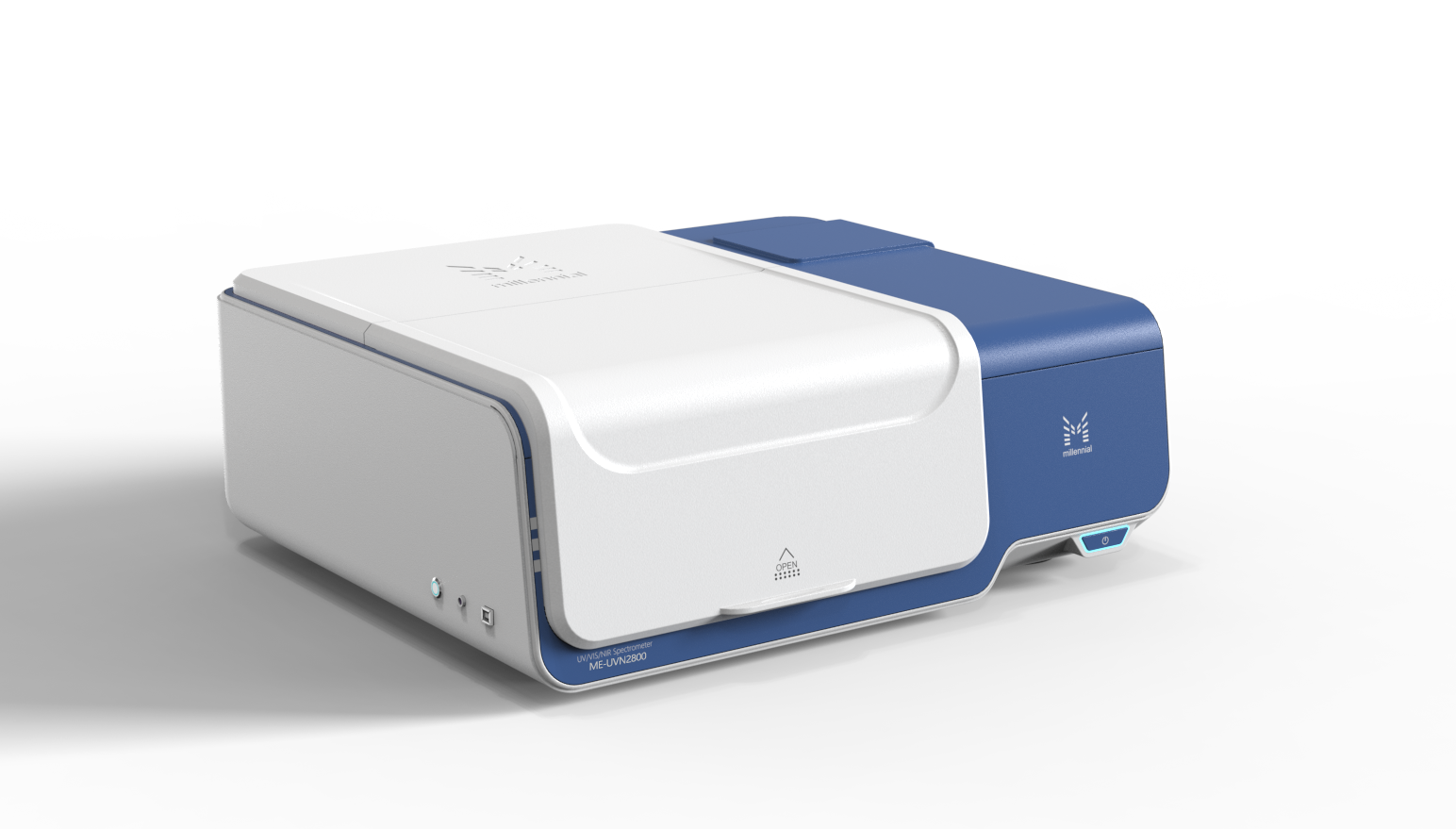
Millennial Spectrophotometer
E-mail: market@millennialsolar.cn
Millennial spectrophotometer Can be used to measure material transmittance, reflectance and absorbance.
Millennial spectrophotometer The unique double-beam optical design can perfectly correct the absorbance changes of different sample matrices, so that the samples can be measured stably. It has the advantages of wide testing range, high precision and good stability. And it supports the measurement of solar transmittance in a wide range of wavelength regions from the ultraviolet region to the near infrared region, providing strong support for the efficiency analysis of solar cells.
The characteristics of low resistivity and high light transmittance of TCO film can greatly improve the efficiency of solar cells. Millennial Spectrophotometer supports the measurement of reflectance and transmittance of ito films in the ultraviolet to near-infrared region, helping you open a new future for optical detection!


