


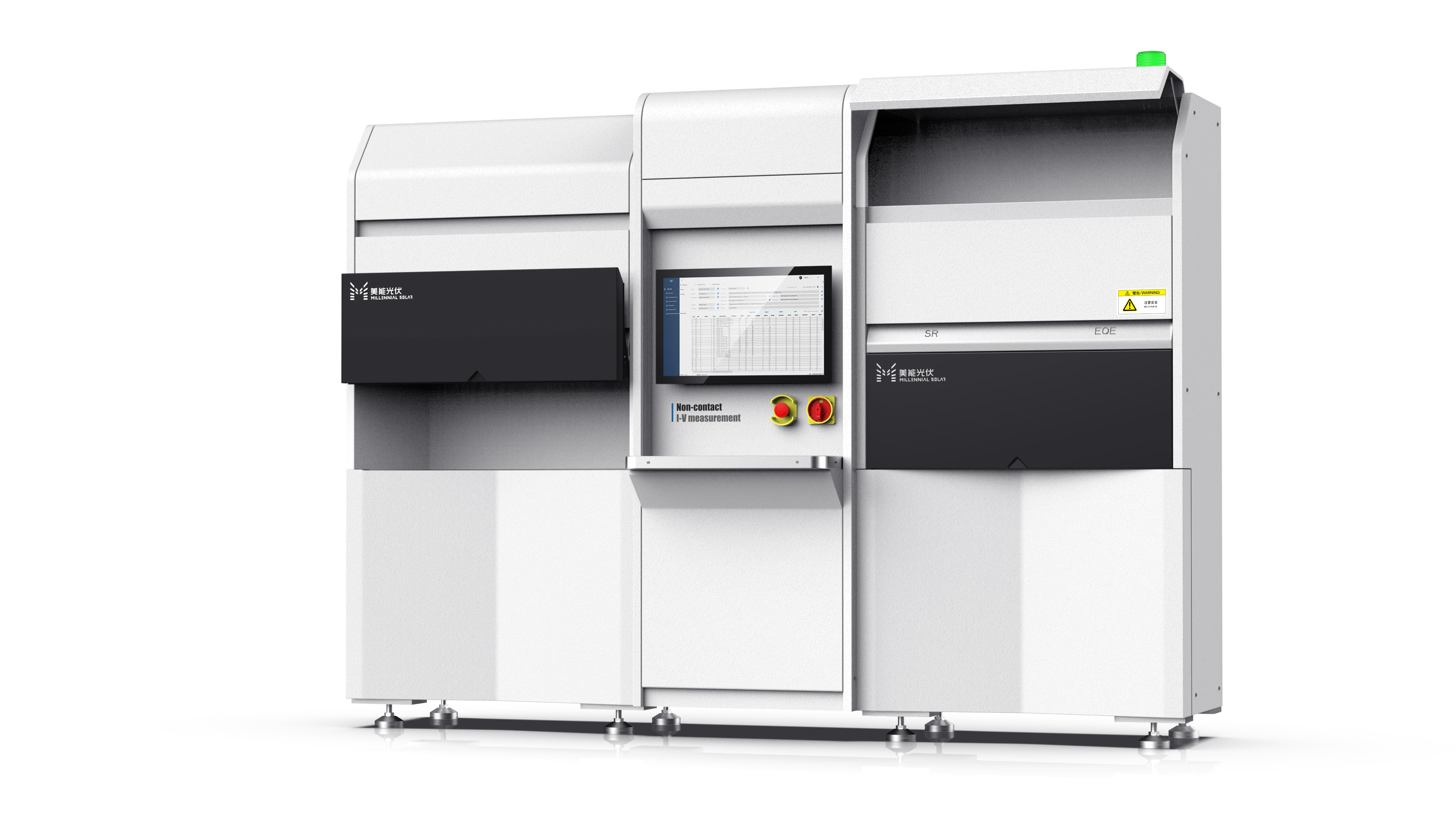
Non-contact IV tester

Quantum Efficiency Tester
PL/EL Integrated System
PV-Reflectumeter
3D Confocal Microscope
In-Line Four Point Probe Tester
Four Point Probe Tester
In-Line Thin Film Thickness Tester
Raman Spectrometer
FTIR Spectrometer
Spectrophotometer
Automatic Spectroscopic Ellipsometer
Contact Resistance Tester
Ultra depth of field 3D microscope
Auto Visual Tester
VMM PV Vision Measuring Machine
Solar Cell Horizontal Tensile Tester
Steady State Solar Simulator for Solar Cell
Solar Cell UV Aging Test Chamber
Solar Cell Comprehensive Tensile Tester
Visual Inspection Tester
Wet Leakage Current Tester
PV Module EL Tester
PV Module UV Preconditioning Chamber
Steady State Solar Simulator for PV Module
Current Continuous Monitor
Potential Induced Degradation Test
Bypass Diode Tester
LeTID Test System
Reverse Current Overload Tester
Impulse Voltage Tester
Hipot Insulation Tester
Ground Continuity Tester
Hipot Insulation Ground Tester
Damp Heat Test Chamber
Humidity Freeze Test
Thermal Cycle Test Chamber
Dynamic Mechanical Load Tester
Static Mechanical Load Tester
Hail Impact Tester
Robustness of Termination Tester
Module Breakage Tester
Cut Susceptibility Tester
Peel Shear Strength Tester
Universal Testing Machine (Single-arm)
Universal Testing Machine (Double-arm)
Glass Transmittance Tester
Acetic Acid Test Chamber
EVA Degree of Crosslinking Test System
Junction Box Comprehensive Tester
Drop ball tester
Semi-automatic scanning four-probe tester
Stylus Profilometer
Maximum Power Point Tracker
Perovskite Glass Transmittance Tester
Perovskite P1 Laser Scribing Multifunctional Testing Machine
Perovskite Online PL Tester
Perovskite Online Sheet Resistance Tester
Online Perovskite Film Thickness Tester
Perovskite Process Inspection Workstation
Portable EL Tester
Portable Thermal Imaging Tester
Solar Module Multi-Channel Testing System
PV Inverter Power Quality Tester
IV Tester
IVEL Cell Sorting Machine
TOPCon Solar Cell UVID Study: Tracking Passivation-Layer Degradation and 6.72% Efficiency Loss with Non-Contact IV Testing
Date : 10 October 2026Views : 60
TOPCon solar cells have become a leading technology in the photovoltaic market owing to their surface passivation and carrier-selective contacts. However, ultraviolet-induced degradation (UVID) remains a concern under outdoor operating conditions: after UV60 exposure, conversion efficiency decreases by 6.72%. Previous studies have often attributed UVID to high-energy photons breaking Si–H bonds and releasing hydrogen. Yet the solar UV spectrum spans a broad photon-energy range of 3.1–4.43 eV, and its interactions with front-side materials extend beyond Si–H bond cleavage. The front-side Al₂O₃/SiNₓ stack is also substantially less UV-resistant than the rear-side structure.
Millennial Solar Non-Contact IV Tester offers nondestructive, consumable-free measurements at millisecond-level speeds, supports BC and busbar-free cells, and obtains multidimensional IV, EQE, and PL data in a single measurement.
This study uses time-of-flight secondary ion mass spectrometry (ToF-SIMS) and X-ray photoelectron spectroscopy (XPS) depth profiling to track elemental distributions and chemical-bond changes in the Al₂O₃/SiNₓ stack before and after UV60 exposure. The results identify N–H bond cleavage as a second source of hydrogen in addition to Si–H bond cleavage. UV-induced Al–O bond breaking in amorphous Al₂O₃ also generates substantial oxygen vacancies. The combined hydrogen- and oxygen-related mechanisms aggravate surface recombination, providing insights for improving passivation-layer reliability.
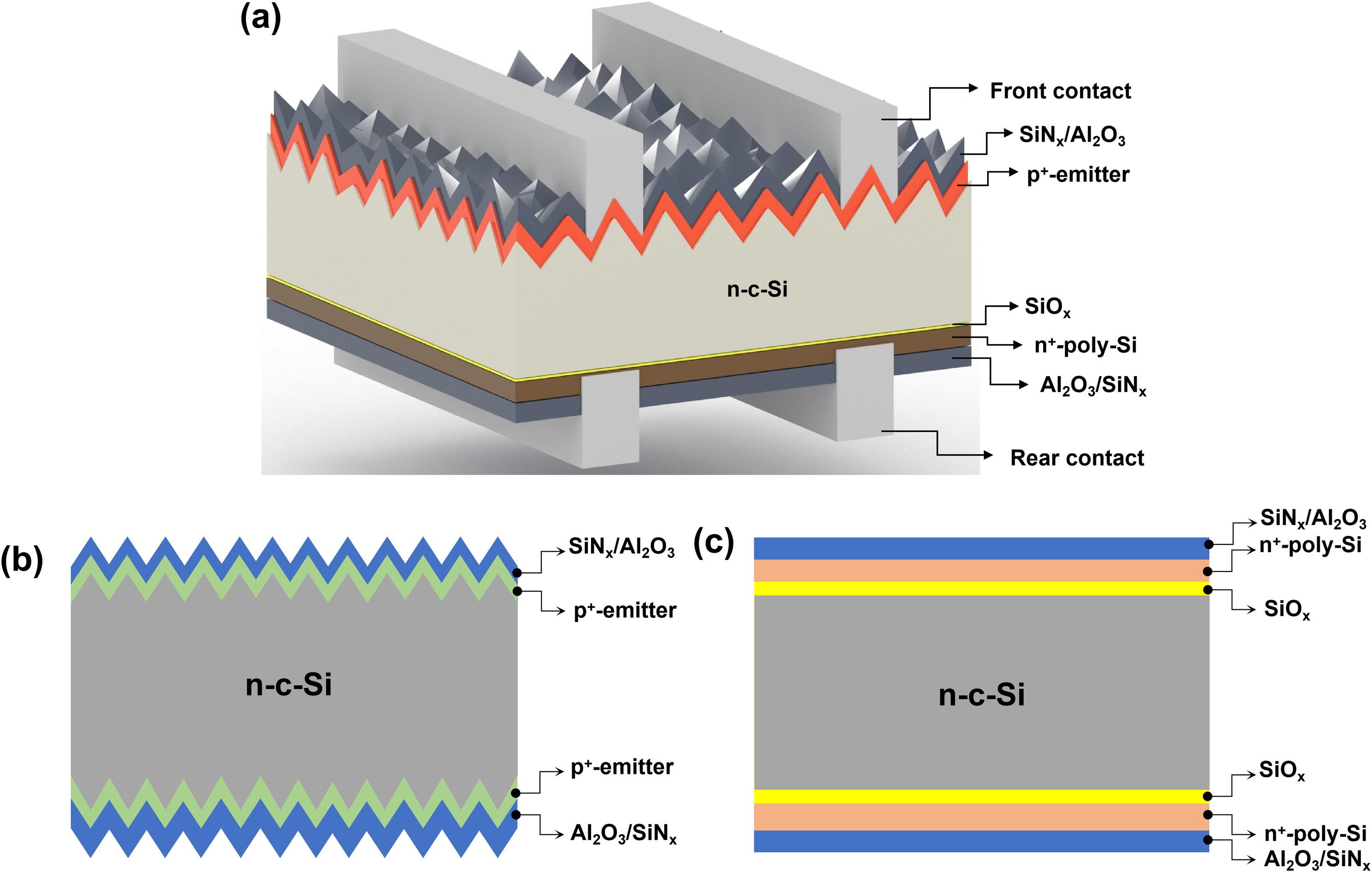
(a) Schematic of the TOPCon solar cell structure; (b) symmetrical front-structure sample; (c) symmetrical rear-structure sample.
Symmetrical front-structure samples (SiNₓ/Al₂O₃/n-Si/Al₂O₃/SiNₓ) and symmetrical rear-structure samples (containing SiOₓ/n⁺-poly-Si layers) were prepared. UV aging was performed at the module level using a predominantly UV-A source containing approximately 11% UV-B, at 60°C and 30% humidity.
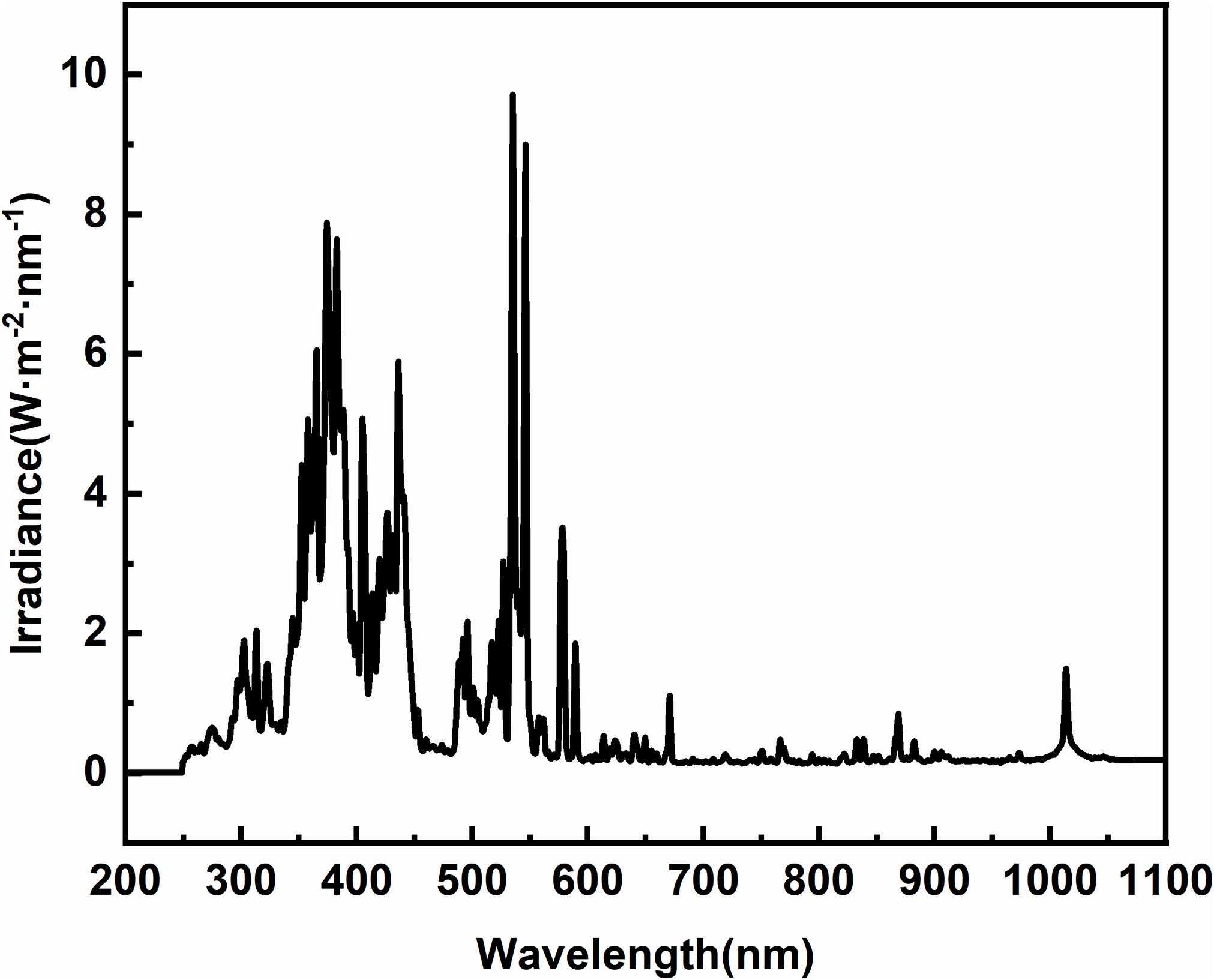
Spectral irradiance of the UV light source.
Comparison of UV Resistance Between Front- and Rear-Side Structures
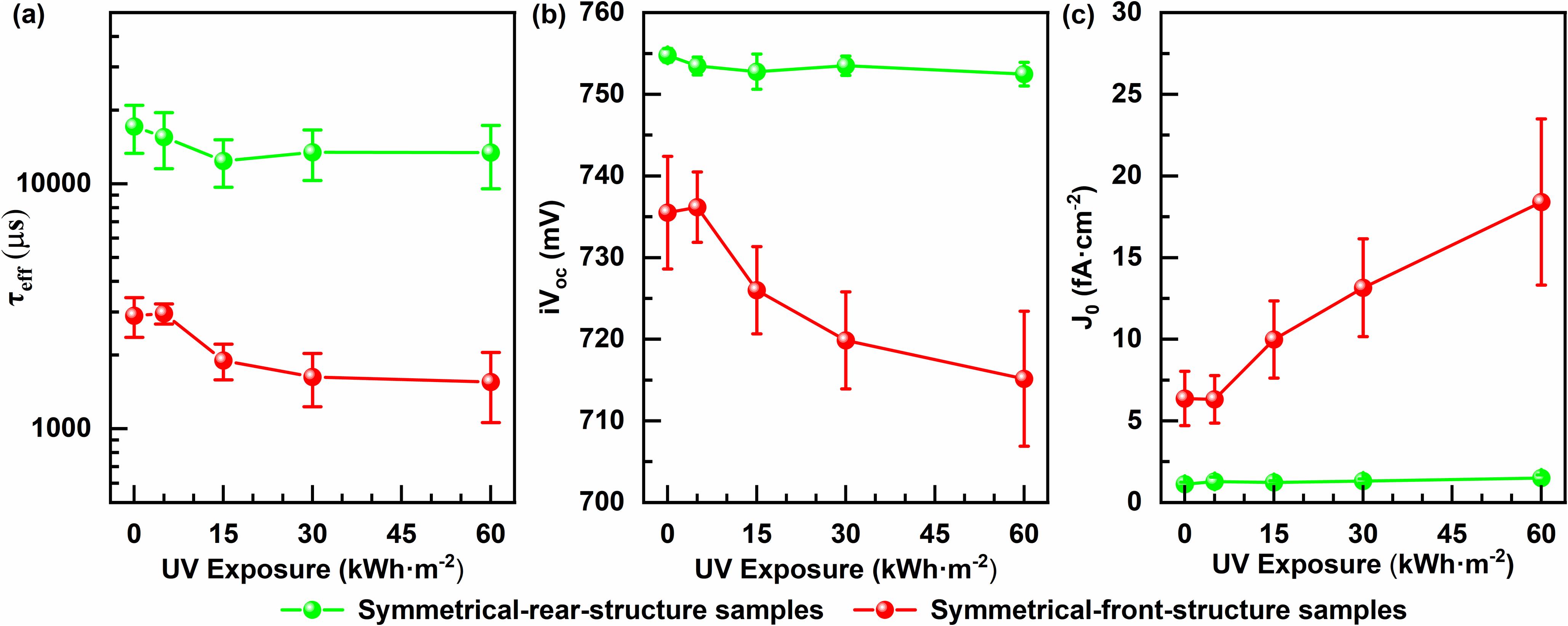
Changes in (a) effective carrier lifetime (τeff) at an injected carrier concentration of 1 × 10¹⁵ cm⁻³, (b) implied open-circuit voltage (iVoc), and (c) single-side recombination current density (J₀) during UV exposure for symmetrical front- and rear-structure samples
The symmetrical rear-structure samples exhibited only minor degradation after 60 kWh·m⁻² of UV exposure. The 120 nm-thick poly-Si layer absorbed nearly all incident UV radiation, providing effective protection. By contrast, the symmetrical front-structure samples degraded substantially: τeff decreased from 2,895.6 to 1,552.8 μs, iVoc fell from 735.5 to 715.2 mV, and single-side J₀ increased to 18.4 fA·cm⁻² (approximately three times its initial value). These changes indicate pronounced degradation of Al₂O₃/SiNₓ passivation.
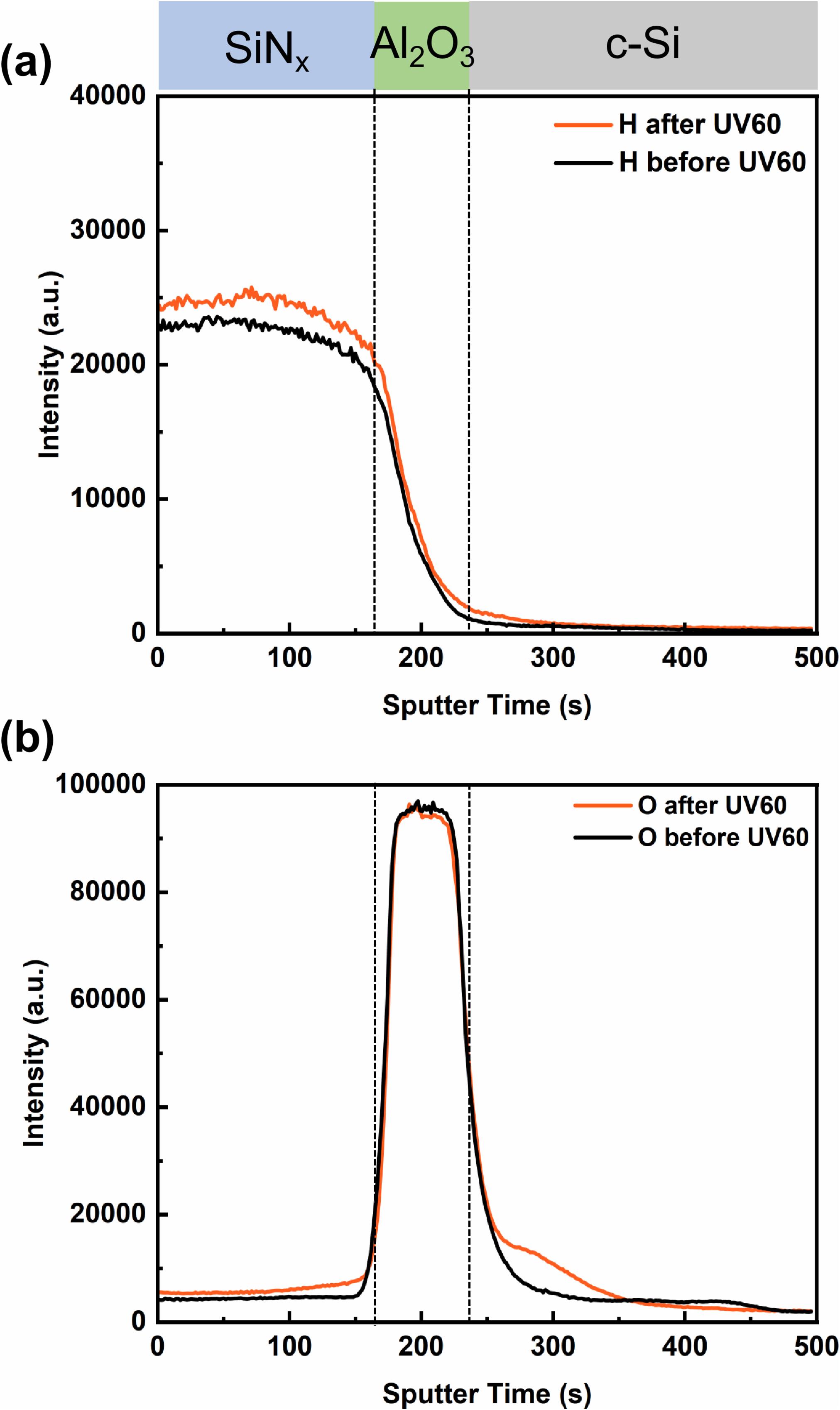
ToF-SIMS intensity depth profiles of (a) hydrogen and (b) oxygen in polished symmetrical front-structure samples before and after UV60 exposure.
ToF-SIMS revealed a marked increase in hydrogen signal after UV exposure, particularly within the SiNₓ layer. N 1s XPS depth profiling showed that the proportion of N–H bonds at the SiNₓ/Al₂O₃ interface decreased from 9.64% to 5.97%, identifying N–H bond cleavage as an additional hydrogen source alongside Si–H bond cleavage. Dissociated hydrogen diffused toward the SiNₓ surface and rebonded with silicon, accompanied by an increase in the local proportion of N–H bonds.
Oxygen redistribution is equally important. The oxygen concentration decreased slightly within Al₂O₃ but increased at the SiNₓ/Al₂O₃ and Al₂O₃/Si interfaces, indicating outward diffusion of oxygen released by Al–O bond cleavage. Although the Al–O bond energy in an ideal crystal is approximately 5.3 eV, electron trapping by undercoordinated aluminum ions and oxygen vacancies in amorphous Al₂O₃ reduces the activation energy for breaking nearby Al–O bonds to approximately 2.4 eV. Consequently, 400 nm UV photons (3.1 eV) can break these bonds.
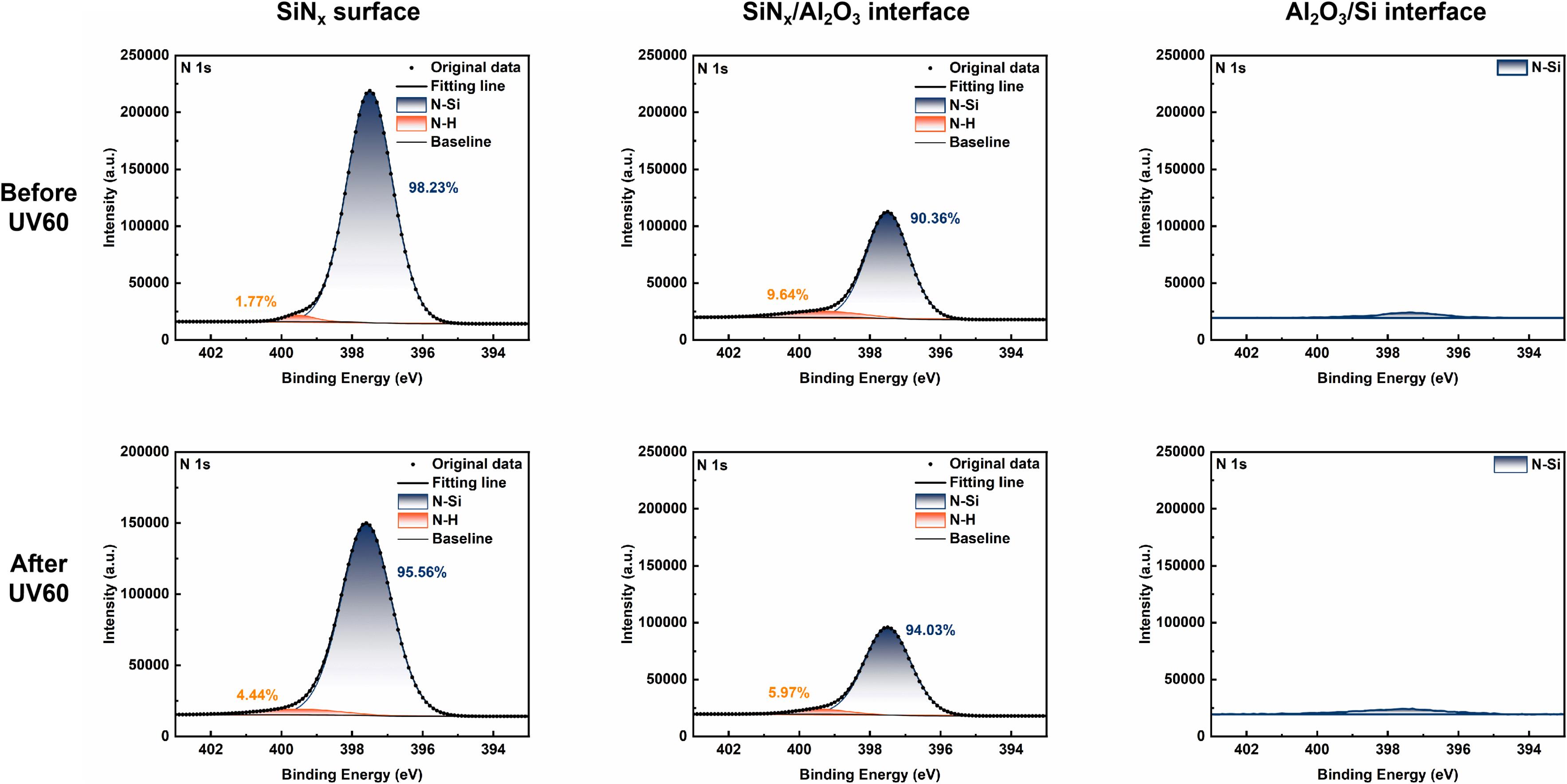
N 1s XPS depth profiles at different interfaces of the Al₂O₃/SiNₓ stack before and after UV60 exposure,
showing fitted contributions from N–Si bonds (397.5 eV) and N–H bonds (399.5 eV).
O 1s XPS analysis indicated a transition from lattice oxygen (O I) to oxygen-vacancy-related species (O II). In the Al 2p spectra, the Al₂O₃ contribution decreased from 69.99% to 60.36%, while the Al–OH contribution increased from 30.01% to 39.64%. In the Si 2p spectra, the Si²⁺ contribution increased while higher silicon oxidation states decreased, consistent with electrons released during oxygen-vacancy formation reducing silicon from higher oxidation states. Together, the changes in oxygen-, aluminum-, and silicon-related bonding indicate deterioration of the Al₂O₃ film.
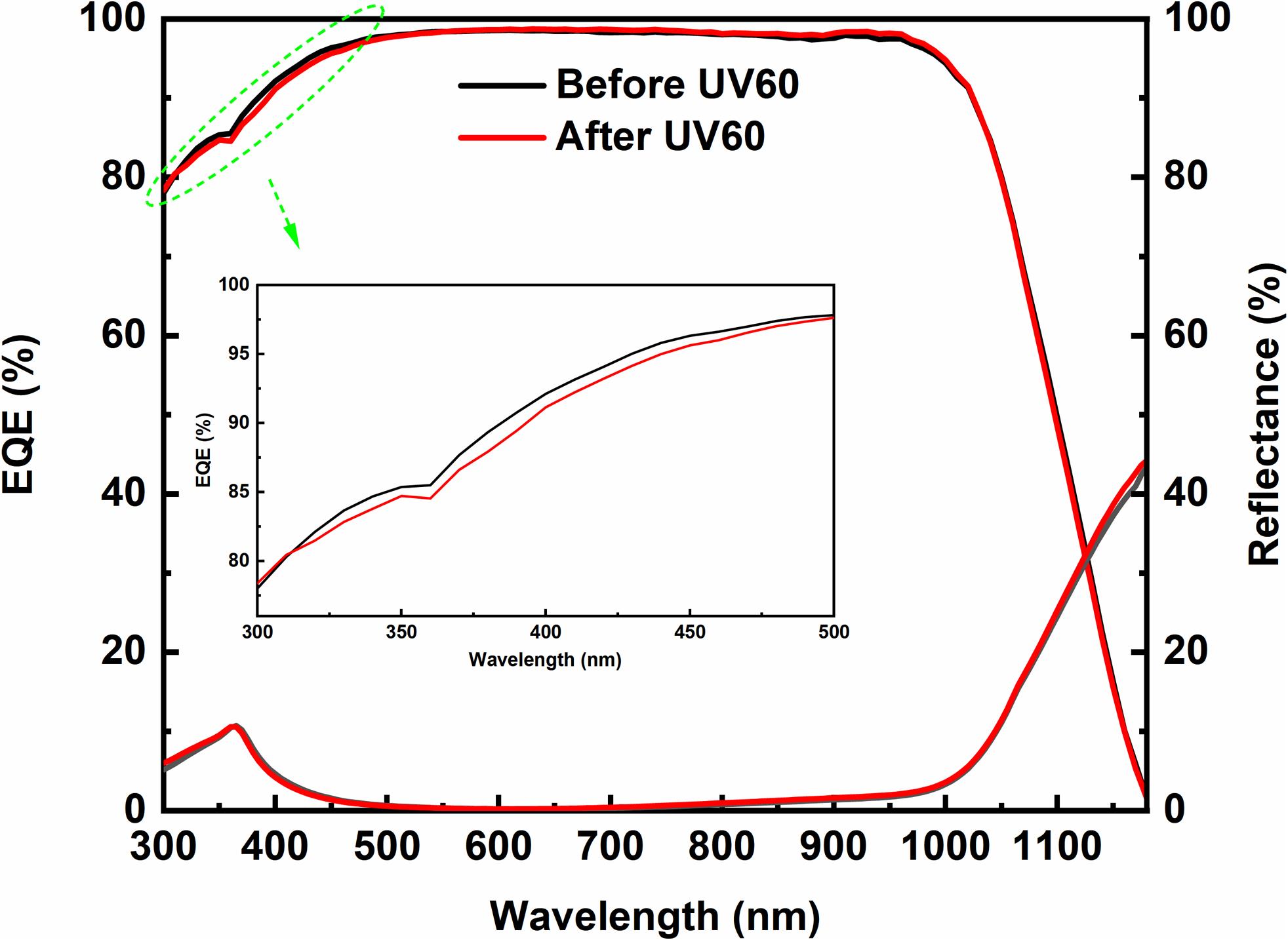
EQE and reflectance spectra of TOPCon solar cells before and after UV60 exposure.
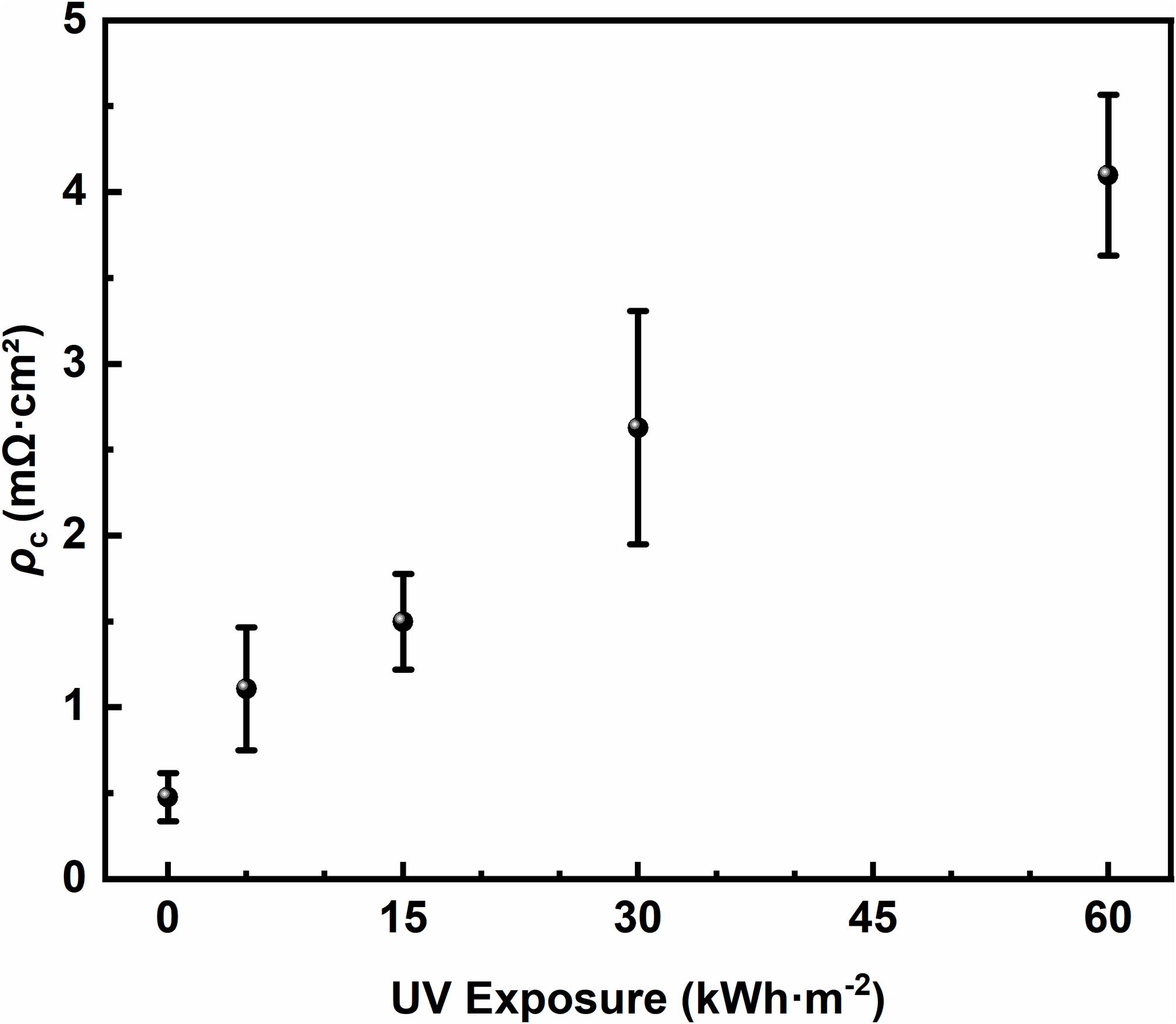
Evolution of front contact resistivity in TOPCon solar cells during UV60 exposure.
Reflectance remained essentially unchanged after UV60 exposure, whereas EQE showed a moderate decrease in the short-wavelength region below 500 nm, consistent with increased front-surface recombination. Front contact resistivity increased approximately linearly with UV dose to 4.1 mΩ·cm² (about 8.6 times the initial value). The study attributes this increase to hydrogen and oxygen released from the passivation stack diffusing toward the electrode interface and participating in redox reactions. UV exposure can also convert water molecules on the silver surface into hydroxyl radicals, contributing to metal-electrode corrosion.
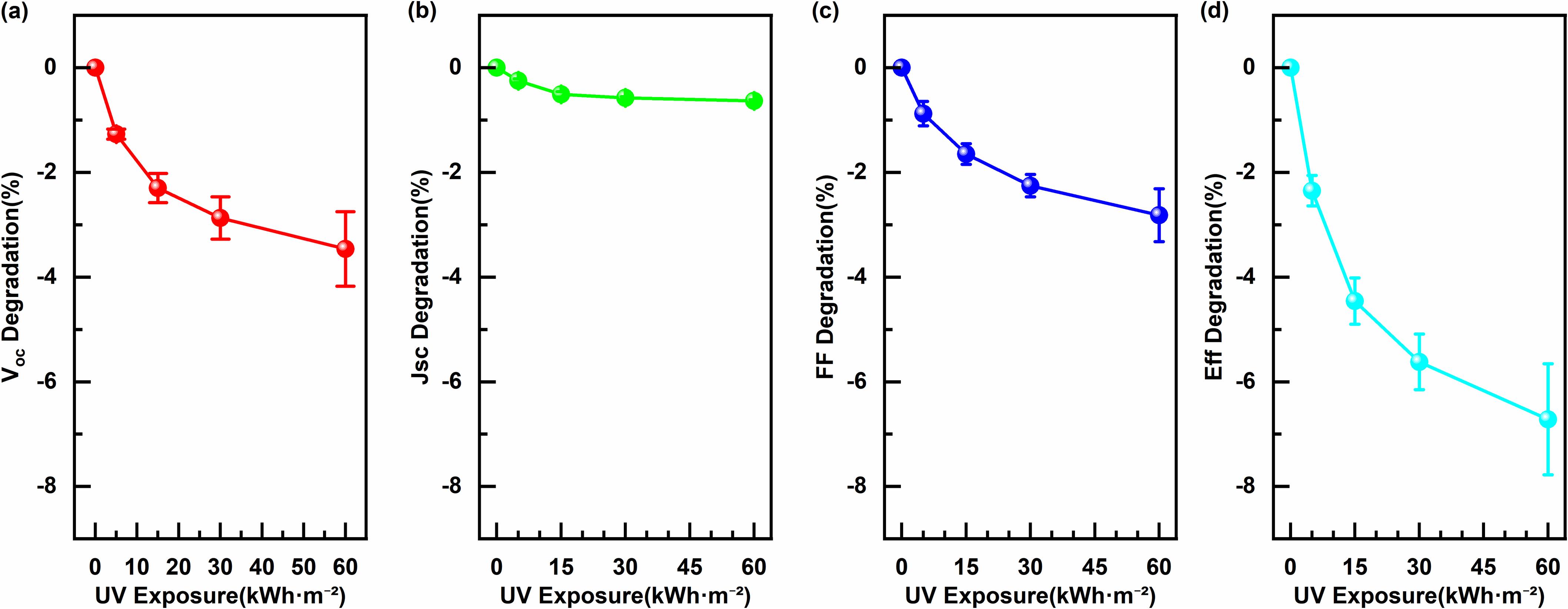
Relative degradation of electrical parameters in TOPCon solar cells during UV60 exposure: (a) Voc, (b) Jsc, (c) FF, and (d) conversion efficiency (Eff).
Voc decreased by 3.46% relative to its initial value, attributed to front-surface passivation degradation and increased J₀. FF declined by 2.82% as front contact resistivity increased, while Jsc decreased by only 0.64%, consistent with the limited reduction in short-wavelength EQE. The final relative loss in power conversion efficiency was 6.72%.
The front-side SiNₓ/Al₂O₃ stack of TOPCon solar cells is substantially less resistant to UV exposure than the rear-side structure. Under UV irradiation, cleavage of Si–H and N–H bonds releases hydrogen, while Al–O bond breaking in amorphous Al₂O₃ releases oxygen and creates numerous oxygen vacancies. The accompanying conversion of Al₂O₃-related bonding toward Al–OH and changes in silicon oxidation states further indicate chemical degradation. The combined hydrogen- and oxygen-related processes aggravate surface recombination. Together with the substantial increase in front contact resistivity, they ultimately lead to a 6.72% relative efficiency loss. These findings help explain UVID mechanisms in TOPCon solar cells and inform efforts to improve the long-term reliability of passivation layers.
Q 1: How does UV exposure affect TOPCon solar cell efficiency?
UV exposure degrades front-side passivation and increases contact resistivity. After UV60 exposure, Voc decreased by 3.46%, FF by 2.82%, and Jsc by 0.64%, resulting in a 6.72% efficiency loss.
Q 2: Why does UV exposure degrade the Al₂O₃/SiNₓ passivation layer?UV exposure breaks Si–H, N–H, and Al–O bonds, releasing hydrogen and oxygen and creating oxygen vacancies. These chemical changes degrade surface passivation and increase carrier recombination.
Q 3: Which TOPCon cell structure is more resistant to UV-induced degradation?The rear-side structure shows significantly better UV resistance. Its 120 nm poly-Si layer absorbs nearly all UV light, while the front-side Al₂O₃/SiNₓ passivation structure experiences substantial degradation.
E-mail: market@millennialsolar.com
Drawing on years of experience in photovoltaic testing, industrial production practices, and academic research, Millennial Solar has developed a Non-Contact IV Tester that enables millisecond-level, nondestructive inspection across crystalline-silicon solar cell technologies.
●Millisecond-Level Measurement: Eliminates time-consuming mechanical contact operations and supports the throughput requirements of high-speed production lines.
●Zero Physical Contact: Suitable for ultra-thin wafers, busbar-free designs, BC cells, and other advanced architectures, without contact-induced damage or consumables.
●Broad Technology Compatibility: Supports PERC, TOPCon, HJT, BC, and other cell technologies.
●Five-Dimensional Data Acquisition: IV + EQE + spectral response (SR) + reflectance (Re) + photoluminescence (PL).
Millennial Solar Non-Contact IV Tester provides an efficient approach to high-performance solar cell inspection. Its contact-free measurement method avoids mechanical contact-related risks of microcracks and contamination, while millisecond-level testing supports production-line throughput. High-precision measurement data can inform process optimization, with reduced maintenance and consumables requirements. It offers a practical way to balance inspection quality and production efficiency in high-efficiency cell manufacturing.
Original Research Reference: Chemical Composition Evolution and Electrical Performance Degradation of TOPCon Solar Cells Under UV Exposure


