Non-contact IV tester

The non-contact IV tester uses optical excitation and multi-station collaborative measurement, so it doesn't need probes to touch the solar cells. It can get parameters like Uoc, Isc, FF, efficiency, series resistance, reflectivity, and EQE in real time, making it great for online inspection, process monitoring, and grading on solar cell production lines.

Quantum Efficiency Tester

The MNPVQE-300Pro quantum efficiency tester is a common tool in photovoltaic research and production line quality processes, used for accurately determining the spectral response/EQE (IPCE) and IQE of solar cells.

PL/EL Integrated System

Offering high-precision detection of internal defects in crystalline silicon solar cells, such as crystal defects and impurities. This enables production personnel to promptly adjust process parameters and improve product quality.

PV-Reflectumeter

The RTIS Matte Reflectance Tester can measure the reflectance intensity of textured surfaces at different wavelengths. The test results are processed by software to calculate the photoelectric signals, ultimately presenting them as visual curves, which facilitates users in systematically characterizing the reflectance properties of the textured surfaces.

3D Confocal Microscope

The ME-PT3000 is a specialized optical instrument for detecting the surface quality of photovoltaic (PV) cells. Based on optical principles, it combines a precision Z-axis scanning module with 3D modeling algorithms to achieve non-contact 3D scanning and imaging. This allows for the quantitative measurement of busbar height/width and the number of textured pyramids, providing feedback on the quality of cleaning, texturing, and screen printing processes.

In-Line Four Point Probe Tester

FPP230 Auto is an In-Line Four Point Probe Tester specifically designed for “photovoltaic process monitoring.” It can quickly and automatically scan samples up to 230 mm in size, obtaining resistivity/resistance distribution information at different positions on the sample.

Four Point Probe Tester

FPP230A is a automatic four point probe tester designed specifically for scientific research. It can quickly and fully automatically scan samples up to 230mm in size, obtaining resistivity/resistance distribution information from different locations on the sample.

In-Line Thin Film Thickness Tester

The POLY5000 is an in-line thin film thickness tester specifically designed for monitoring photovoltaic processes. It can perform rapid, automatic 5-point synchronous scanning of samples, monitoring the thickness and optical constants of various films on the "industrial production line". It provides fast and accurate measurements of film thickness, optical constants, and other information, with customizable measurement dimensions based on customer sample sizes.

Raman Spectrometer

The Millennial Solar Galaxy Solar crystallization rate tester is suitable for both spectroscopy and imaging, featuring a high spectral resolution and extremely low stray light. This ensures the accuracy and repeatability of spectral data. A series of new technologies for Raman spectral imaging have been introduced, significantly enhancing the quality and speed of Raman spectral imaging. The novel imaging algorithms can extract useful spectral information from complex big data.

FTIR Spectrometer

Fourier Transform Infrared Absorption Spectroscopy (FTIR) is a powerful tool for studying the relationship between the emission or absorption of radiation by various molecules in the infrared spectrum and their molecular structures. It is primarily used for the analysis of material structures.

Spectrophotometer

The UVN2800-Pro spectrophotometer features a unique dual-beam optical design that effectively corrects for absorbance variations caused by different sample matrices, allowing for stable sample measurements. It offers a wide testing range, high precision, and excellent stability.

Automatic Spectroscopic Ellipsometer

The UVPLUS SE Spectroscopic Ellipsometer is a high-performance, specialized spectral ellipsometer developed by Millennial Solar for the research and quality control of photovoltaic solar cells. It covers a wavelength range from ultraviolet to visible and near-infrared.

Contact Resistance Tester

In the optimization of solar cell electrodes, contact resistance is an important aspect to consider. The magnitude of contact resistance is not only related to the contact geometry but also to the diffusion and sintering processes. Measuring contact resistivity can reflect issues present in the diffusion, electrode fabrication, and sintering processes.

Ultra depth of field 3D microscope

The ME-UD6300 Ultra Depth-of-Field Microscope is a detection instrument designed for sub-micron level measurements of various precision components and material surfaces. It utilizes high numerical aperture objectives and apertures, adjusting the size of the light spot and the position of the aperture to achieve varying degrees of focus at different depths, thereby realizing the ultra depth-of-field effect.

Auto Visual Tester

Millennial AVT-4030 Auto Visual Tester integrates size, defect, film thickness, and tension detection into one, achieving high precision, high efficiency, and comprehensive defect detection for photovoltaic screen printing, as well as line width, line spacing, and shrinkage measurement. It is the ideal quality inspection assistant for quality control (QC) personnel.

VMM PV Vision Measuring Machine

Millennial Vision Measuring Machine equipped with a measurement system based on a high-resolution camera, allowing for fast and accurate measurement of various components.

Solar Cell Horizontal Tensile Tester

In the photovoltaic industry, during the incoming material inspection of solar cells, bending tests and solder strip peel strength tests are conducted to evaluate the quality of the bus bar welding. The ME-CELL-HTT is a horizontal tensile testing machine specifically designed for 180° peel tests on solar cells.

Steady State Solar Simulator for Solar Cell

The Millennial Steady State Solar Simulator for Solar Cell utilizes metal halide lamps that simulate full-spectrum light sources to replicate destructive light waves present in various environments. It provides corresponding environmental simulation and accelerated testing for photovoltaic solar cell product development and quality control.

Solar Cell UV Aging Test Chamber

The Millennial Solar Cell UV Aging Test Chamber for Photovoltaic Solar Cells is a device specifically designed to simulate the ultraviolet radiation in the natural environment and conduct accelerated aging tests on photovoltaic solar cells.

Solar Cell Comprehensive Tensile Tester

The Millennial Solar Cell Comprehensive Tensile Tester has a horizontal module testing function. It can conduct a horizontal 180° solder strip peel strength test, with 28 sensors in use simultaneously. It can also perform cell bending tests, meeting three point and four point bending test requirements.

Visual Inspection Tester

Appearance defects of photovoltaic modules (such as cracks, bubbles, delamination, etc.) may intensify during subsequent tests and have an adverse impact on the performance of the modules.

Wet Leakage Current Tester

Wet Leakage Current Tester is used to verify the influence of moisture caused by rain, fog, dew or melting snow on the circuit caused by corrosion, leakage or safety accidents,ensure that the insulation performance of the module complies with the standards.

PV Module EL Tester

The EL tester for photovoltaic modules in the laboratory is a high-precision detection device based on the principle of electroluminescence (EL). It is mainly used to evaluate the internal defects and performance of photovoltaic modules, ensuring the product quality and reliability.

PV Module UV Preconditioning Chamber

The Millennial PV Module UV Preconditioning Chamber for photovoltaic modules is a specialized device used to simulate the ultraviolet radiation in the natural environment and conduct accelerated aging tests on photovoltaic modules.

Steady State Solar Simulator for PV Module

The Millennial Steady State Solar Simulator uses metal halide lamps that can simulate full - spectrum light sources to reproduce the destructive light waves present in different environments. It can provide corresponding environmental simulation and accelerated tests for the product development and quality control of photovoltaic modules.

Current Continuous Monitor

The current continuity test system is for IEC61215 standard 10.11 high and low temperature cycle experiment clause, 10.12 wet freezing experiment clause. Mainly includes the provision of stable direct current, current recording, temperature recording and temperature control functions, through the temperature control of the DC power supply, the multi-channel current, multi-channel temperature long-term real-time monitoring.

Potential Induced Degradation Test

Long-term leakage current will cause changes in the state of the cell carriers and depletion layer,corrosion of the contact resistance in the circuit,and electrochemical corrosion of packaging materials.This results in cell power attenuation,increased series resistance,reduced light transmittance,delamination and other phenomena that affect the long-term power generation and life of the module.

Bypass Diode Tester

The Bypass Diode Tester is a core inspection device specifically designed for photovoltaic modules, which is used to evaluate the conduction performance, thermal stability, and durability of bypass diodes under extreme operating conditions. As the "safety valve" of photovoltaic modules, bypass diodes can effectively prevent the hot spot effect and ensure that the modules can still operate safely when there is partial shading or when solar cells fail.

LeTID Test System

Reverse Current Overload Tester

During the application of solar cells, due to voltage drops, they may be reversely charged by other cell strings. If the reverse charging current does not reach the protection current of the cell string fuse, the module may be reversely charged for a long time, with the temperature continuously rising, thus damaging the module.

Impulse Voltage Tester

The Millennial Impulse Voltage Tester is a key device specifically designed to evaluate the insulation performance and reliability of photovoltaic modules under transient overvoltage conditions such as lightning strikes and switching surges.

Hipot Insulation Tester

The photovoltaic hipot insulation tester is a specialized device used to evaluate the insulation performance and withstand voltage capability of photovoltaic modules and electrical equipment. It mainly detects the leakage current, insulation resistance, and withstand voltage strength of these components in a high-voltage environment to ensure that the products meet the safety standards and prevent the risks of fires or equipment damage caused by insulation failures.

Ground Continuity Tester

The Ground Continuity Tester is a key device specifically designed to evaluate the reliability of the grounding system of photovoltaic modules. Its main function is to detect the resistance value between the metal frame of the photovoltaic module, the junction box, and the grounding conductor, ensuring that the grounding continuity meets the safety standards.

Hipot Insulation Ground Tester

ME-PV-HIG developed by Millennial Solar for photovoltaic industry automated testing systems, the ME-PV-HIG combines withstand voltage testing, insulation resistance measurement, and ground continuity verification in one advanced device. Standard with data acquisition software and supporting remote firmware updates via USB, it fully complies with photovoltaic standards IEC 61215 and IEC 61730.

Damp Heat Test Chamber

Solar modules must withstand harsh climatic conditions during application. Among these, the high-temperature and high-humidity environment (DH test) is a core testing item for evaluating photovoltaic module reliability and material durability.

Humidity Freeze Test

During the application process of solar modules, they will be subjected to the tests of various harsh weather conditions. Among them, the performance of the modules, such as their ability to withstand high temperature and high humidity as well as the subsequent impact of low temperature, and their ability to withstand long-term moisture penetration, needs to be evaluated. The HF test is carried out to verify and evaluate the reliability of the modules or materials, and to identify manufacturing defects at an early stage by inducing failure modes through thermal fatigue.

Thermal Cycle Test Chamber

The Millennial Thermal Cycle Test Chambe is a reliability testing device specifically designed for solar modules. It accurately simulates a rapidly alternating environment of high and low temperatures to verify the performance, structural stability, and long-term durability of module products under extreme temperature conditions. Moreover, by inducing failure modes through thermal fatigue, it helps users detect potential defects in advance, thus improving product quality and market competitiveness.

Dynamic Mechanical Load Tester

Mechanical performance assessment is required for both photovoltaic (PV) modules and building - integrated photovoltaic (BIPV) systems. This assessment is a crucial step in ensuring the long - term functionality of these systems and optimizing commercial products. Performance tests are carried out through methods such as mechanical loading (ML), inhomogeneous mechanical loading (IML), and dynamic mechanical loading (DML) to verify the performance of PV modules under external mechanical loads, ensuring that the modules are free from visual damage and significant loss of electrical functionality.

Static Mechanical Load Tester

The static mechanical load tester for photovoltaic modules is a specialized device used to simulate the static mechanical loads (such as wind pressure, snow pressure, ice accumulation, etc.) that photovoltaic modules bear during actual outdoor installation. By applying continuous pressure or tensile force, it evaluates the structural strength, material durability, and electrical performance stability of the modules.

Hail Impact Tester

During the operation of a photovoltaic (PV) system, PV modules face various environmental challenges, including hail. When hailstones strike the surface of PV modules at high speed, they may cause serious impacts such as surface damage, cell damage, and broken connection wires. Therefore, understanding the impact of hail on PV modules and the modules' impact - resistance capabilities is crucial for ensuring the reliability and durability of the PV system.

Robustness of Termination Tester

This test is for IEC61215 standard MQT14 in the design and development of the leading end strength test system, testing machine is divided into tensile testing machine, torsion testing machine, adhesion testing machine 3 products.

Module Breakage Tester

The module breakage tester is a specialized testing equipment dedicated to evaluating the impact resistance performance of photovoltaic modules (especially BIPV). Its core function is to simulate the scenarios of the glass surface being impacted by the human body or objects, and verify the safety of the modules under extreme mechanical loads.。

Cut Susceptibility Tester

Solar panels have plastic materials on their surface. During any process of production, installation, and operation, they may be scratched when touched by sharp objects, affecting the insulation of the panels. In severe cases, the internal charged parts will be exposed, resulting in the risk of electric shock.

Peel Shear Strength Tester

Peel Shear Strength Tester is an innovative dual-function equipment developed through years of PV product testing and research, specifically designed for both peel testing and adhesion testing of photovoltaic modules. Its technical specifications fully comply with the requirements of IEC 61730-2:2016 standards.

Universal Testing Machine (Single-arm)

The Millennial Universal Testing Machine (Single-arm) adopts a compact single-column design. Tailored for the small-load, high-precision testing demands of photovoltaic materials, it is ideal for key components such as solder strips, encapsulation films, and junction box connectors.

Universal Testing Machine (Double-arm)

The Millennial Universal Testing Machine(Double-arm is a high-precision and high-stability mechanical testing device. Centered around a double-column gantry structure, it features high stability and large load-bearing capacity. It is specifically designed for verifying the strength of materials such as PV glass, aluminum alloy frames, and backsheets.

Glass Transmittance Tester

Glass Transmittance Tester PGT2400 is a powerful tool for photovoltaic glass performance testing. It has high-precision measurement accuracy and stability. It can measure the transmittance of the sample, calculate the AM1.5 effective solar transmittance, visible light transmittance, Y, x, y, L*, a*, b* and other color parameters of ultra-white embossed glass, and display CIE color coordinates and chromaticity diagrams.

Acetic Acid Test Chamber

Photovoltaic modules usually use EVA (ethylene-vinyl acetate copolymer) adhesive film to encapsulate solar cells. During the long-term exposure and use outdoors, in addition to the erosion of water vapor, the EVA adhesive film will also degrade to generate acetic acid and olefins. The escaped acetic acid can corrode the electrode grid lines, solder ribbons, etc. of the solar cells, affecting the output power and safety performance of the photovoltaic modules.

EVA Degree of Crosslinking Test System

Degree of cross-linking Test System is used to test materials such as EVA cross-linking, polyethylene (PE cross-linking,polyethylene insulated wire and cable (XLPE) cross-linking,natural polymer ion cross-linking and polymer crystallinity for photovoltaic module encapsulation. Test its flexibility, impact resistance, elasticity, optical transparency, low temperature bending, adhesion, environmental stress cracking resistance,weather resistance, chemical resistance, and heat sealing.

Junction Box Comprehensive Tester

The ME - 9960 junction box comprehensive tester is a dedicated testing instrument developed by our company to meet the testing requirements for the electrical characteristics of photovoltaic junction boxes. It can test parameters such as the forward conduction voltage drop VF, reverse leakage current IR, reverse voltage VR, on-state DC resistance R, and temperature TC of the diodes inside the junction box.

Drop ball tester

The Millennial Drop Ball Tester adjusts a steel ball of a specified weight to a certain height and allows the steel ball to fall freely for the test. It impacts the surface of the test specimen and observes the degree of damage, which is used to determine the quality of plastics, ceramics, acrylics, glass fibers, photovoltaic modules, tempered glass and junction boxes.

Semi-automatic scanning four-probe tester

The FPP300SA is a semi-automatic four-point probe sheet resistance tester designed for scientific research. It enables fast and precise testing of samples up to 450mm x 400mm, providing sheet resistance/resistivity information at different locations. The probe head incorporates precision mechanical clock movement technology, utilizing ruby bearings to guide tungsten carbide probes, ensuring high mechanical accuracy and extended durability. Industry-leading repeatability of 0.2% is achieved for standard resistor testing.

Stylus Profilometer

The Millennial Stylus Profilometer adopts contact - based surface topography measurement. It can measure the profiles of sample surfaces on scales ranging from micrometers to nanometers, and is capable of measuring step height, film thickness and thin - film height, surface topography, surface waviness, surface roughness, etc. It represents a new development in traditional surface topography measurement.

Maximum Power Point Tracker

Millennial Maximum Power Point Tracker is a powerful and comprehensive multi-channel solar cell and component stability test system tailored for perovskite solar cell researchers. It uses a BBA-level LED solar simulator as an aging light source. It can control the temperature of the battery and the environmental atmosphere of the battery in a variety of ways (N2, dry air, constant temperature and humidity, etc.).

Perovskite Glass Transmittance Tester

The online transmittance detection equipment for perovskite solar cells is a system that real - time monitors the optical transmittance of perovskite thin films, transparent oxide glass, or modules. It is used to optimize processes, ensure uniformity, and improve cell efficiency.

Perovskite P1 Laser Scribing Multifunctional Testing Machine

After the deposition of the transparent conductive electrode (TCO) and before the deposition of the hole - transport layer, a laser device will perform laser scribing on the sample to form independent strip - shaped conductive electrodes, which will serve as positioning points for subsequent P2 and P3 scribing. Therefore, by conducting quality inspections on P1 scribing, the efficiency, stability, uniformity, lifespan, safety, and manufacturing cost - effectiveness of perovskite solar cells can be improved in multiple aspects.

Perovskite Online PL Tester

Online PL defect detection addresses core challenges in solar cell production—speed, yield, cost, process optimization, and stability—through its non-contact, high-precision, and real-time feedback capabilities. Integrated with AI-driven deep learning, it enables fully automated defect identification and process optimization. This empowers customers to refine manufacturing parameters based on test results, enhancing device efficiency and stability.

Perovskite Online Sheet Resistance Tester

The online sheet resistance tester is a critical quality control device for perovskite solar cell production lines, designed to monitor the sheet resistance of materials such as transparent conductive layers in real time. Utilizing four-probe technology, it enables high-speed detection of thin-film conductivity uniformity, ensuring stable series resistance and fill factor, thereby enhancing the photovoltaic conversion efficiency of cells.

Online Perovskite Film Thickness Tester

The online thickness measurement system utilizes spectroscopic ellipsometry principles. It analyzes alterations in the polarization state of linearly polarized light after reflection from thin-film samples. By measuring phase differences and amplitude ratios, film thickness is derived through model fitting. Featuring non-destructive testing capabilities, it preserves delicate film integrity while adapting to both wet-processing techniques (slot-die coating, inkjet printing) and vacuum deposition applications.

Perovskite Process Inspection Workstation

The Perovskite Process Inspection Workstation integrates a Contact Angle Test Module, an Ellipsometer Test Module, a Sheet Resistance Test Module, and a Reflectance Test Module, facilitating users to conduct comprehensive evaluations of photovoltaic films. This all-in-one testing machine supports manual click/auto-switching of test modules. During testing, it enables single-point positioning mapping (supporting up to 5,000 points) and single-point multi-technique measurement (multifunctional testing for single points), maximizing one-stop service for customers.

Portable EL Tester

The portable EL tester is designed to detect hidden cracks inside solar panels, ensuring efficient power generation of photovoltaic modules. With a compact design, user-friendly operation, and high portability, it is ideally suited for mobile users requiring on-site inspections. This mobile testing tool is tailored for component inspection in solar power plants. 3 Core Strengths: High-Def Imaging, Intelligent Recognition, Portable Operation Adaptable to indoor/outdoor all-terrain inspection, it enables rapid & accurate identification of internal defects in diverse PV modules (e.g., c-Si, perovskite). By streamlining ops processes, boosting inspection efficiency, and cutting labor costs, it delivers reliable testing data for plant O&M—empowering teams to achieve refined management and minimize power generation losses.

Portable Thermal Imaging Tester

This compact handheld infrared thermal imager is specifically designed for photovoltaic power plants to conduct temperature inspections on all electrical equipment. It helps identify potential faults, reduce maintenance costs, and ensure production safety.

Solar Module Multi-Channel Testing System

The outdoor module multi-channel testing system provides real-time synchronous multi-channel testing capabilities and supports customization of channel quantity and test module power according to specific user requirements. By networking multiple testers, it forms an evaluation system capable of simultaneously testing up to 300 photovoltaic (PV) modules, making it ideal for outdoor PV module performance comparison. The system enables comparative testing of multi-channel power generation efficiency, allowing side-by-side evaluation of IV characteristics and energy yield differences across different modules on the same time base.

PV Inverter Power Quality Tester

The PV inverter power quality tester provides detailed recording and analysis of power quality parameters at photovoltaic power plant sites, including harmonics, voltage, current, frequency, voltage fluctuations, flicker, power, and three-phase unbalance. It also features advanced measurement functions such as power transient monitoring, waveform recording analysis, energy efficiency loss assessment, and inverter performance measurement, providing accurate data for managing grid-connected power quality in PV power plants.

IV Tester

It is mainly used to test the electrical properties of solar cells or modules. By testing the volt-ampere characteristic curve of solar cell or module, it can get its maximum power Pmax, maximum power point current Impp, maximum power point voltage Vmpp, short-circuit current Isc, open-circuit voltage Voc, fill factor FF (Fill Factor), photovoltaic conversion efficiency Eff, series resistance Rs, parallel resistance Rsh and other parameters.

IVEL Cell Sorting Machine

Millennial IVEL Cell Sorting Machine is the core equipment of PV cell production line, designed for high efficiency cell performance classification (IV test) and defect detection (EL test), supporting data traceability to optimize the process, and significantly improving module yield and product value.
What can we help you find?
Current location : Home > News & Events > Media Release

Temperature-Dependent Degradation and LeTID Kinetics in n-Type BC Solar Cells

Date : 30 September 2026Views : 55

Interdigitated back-contact (IBC) solar cells place both polarities of metal contacts on the rear side, eliminating front-side grid shading and allowing the optical advantages of surface texturing and anti-reflection coatings to be fully utilized. Combined with passivation and contact engineering, n-type IBC cells can achieve high open-circuit voltage and current density. However, this architecture also has inherent sensitivities: photogenerated minority carriers must travel laterally through the base region before being collected by the interdigitated rear emitters, making device performance highly dependent on bulk lifetime and rear-side passivation quality. Once rear-interface recombination or contact leakage is thermally activated, the dark saturation current density J0 can increase significantly, resulting in a loss of Voc. Millennial Solar Non-contact IV Tester provides non-destructive, consumable-free, millisecond-level measurement for BC and busbar-free cells, with simultaneous acquisition of multiple parameters including IV, EQE, and PL.

This is the focus of the present study: for n-type IBC cells, illuminated J-V measurements from 25–85°C, LeTID stress tests under one sun at 45–85°C for up to 960 minutes, and dark IV analysis over the same temperature range were conducted within the same thermal environment, allowing the three sets of evidence to be considered together.
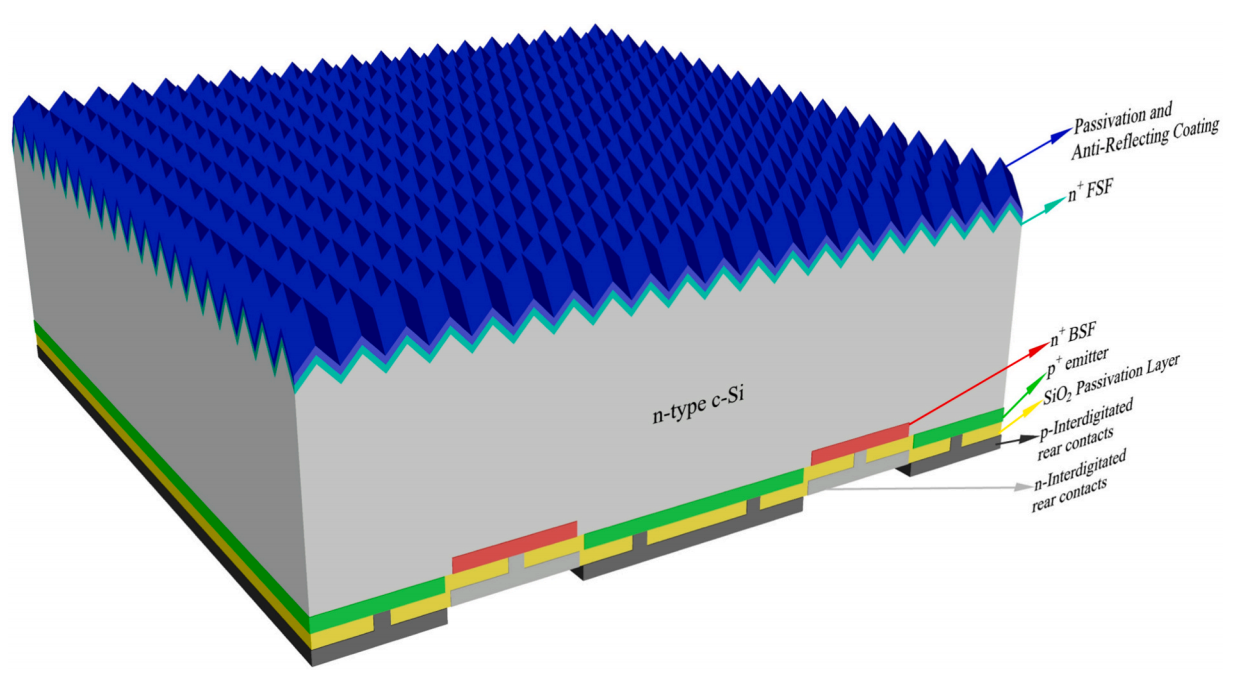

Experimental Design

Fig. 1.png

Cross-sectional schematic of the n-type IBC solar cell: rear interdigitated p+ emitter and n+ BSF contacts,

with front-side texturing and an anti-reflection coating (ARC).

The experimental cells had an area of 258.3 cm² and a silicon wafer thickness of 151 ± 6 μm. The rear interdigitated pitch was approximately 480 μm, while the emitter and BSF fingers were approximately 250 μm and 90 μm wide, respectively. Illuminated measurements were performed under AM1.5G at 100 mW/cm². At each temperature point, five scans were averaged after thermal stabilization. LeTID stress measurements were performed directly at the stress temperature without intermediate cooling, with data recorded at exponentially spaced intervals of 1, 2, 4, 8, … minutes. Each parameter was normalized to its initial value to distinguish intrinsic degradation kinetics from instantaneous temperature-coefficient effects.
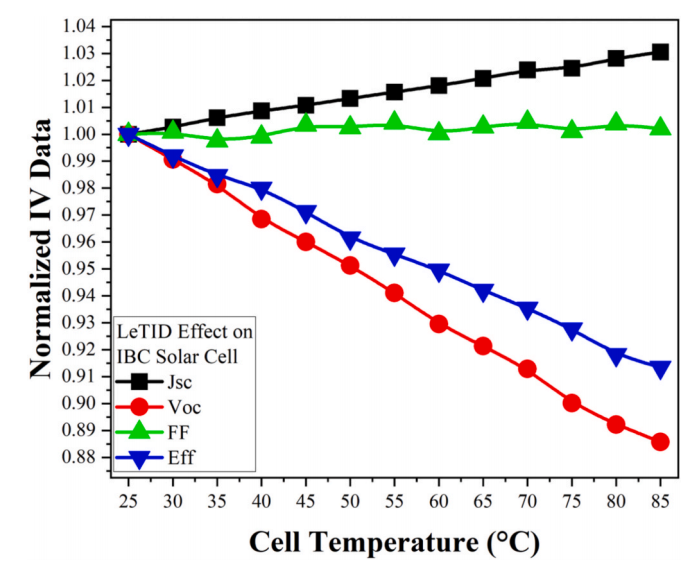

Steady-State Thermal Sensitivity

Fig. 4.png

Normalized thermal evolution of four parameters relative to their respective values at 25°C

At 25°C, the cell exhibited a Jsc of approximately 38.6 mA/cm², a Voc of approximately 0.743 V, an FF of approximately 79%, and an efficiency of approximately 22.7%. When the temperature increased to 85°C, Jsc increased by only about 3% (+0.0203 mA·cm⁻²·K⁻¹, approximately +0.05%/K), while Voc decreased linearly at −1.4 mV/K (approximately −0.2%/°C). Efficiency decreased by approximately 9%, while FF remained nearly unchanged.

The small increase in current results from bandgap narrowing: according to the Varshni relationship, the absorption edge shifts toward longer wavelengths, slightly increasing photogeneration. The more rapid voltage degradation originates from the exponential increase of J0(T), governed by the intrinsic carrier concentration and recombination activity. Because Voc is proportional to ln(Jsc/J0), even a moderate increase in J0 can produce a measurable voltage loss. This temperature coefficient falls within the commonly observed range of −1.3 to −1.6 mV/K for high-quality crystalline-silicon devices, indicating a recombination-limited rather than resistance- or transport-limited behavior. The normalized trends are also clear: at 85°C, Voc decreased by about 15% relative to 25°C, efficiency decreased by about 9%, FF remained within ±1%, and Jsc increased by about 3%.
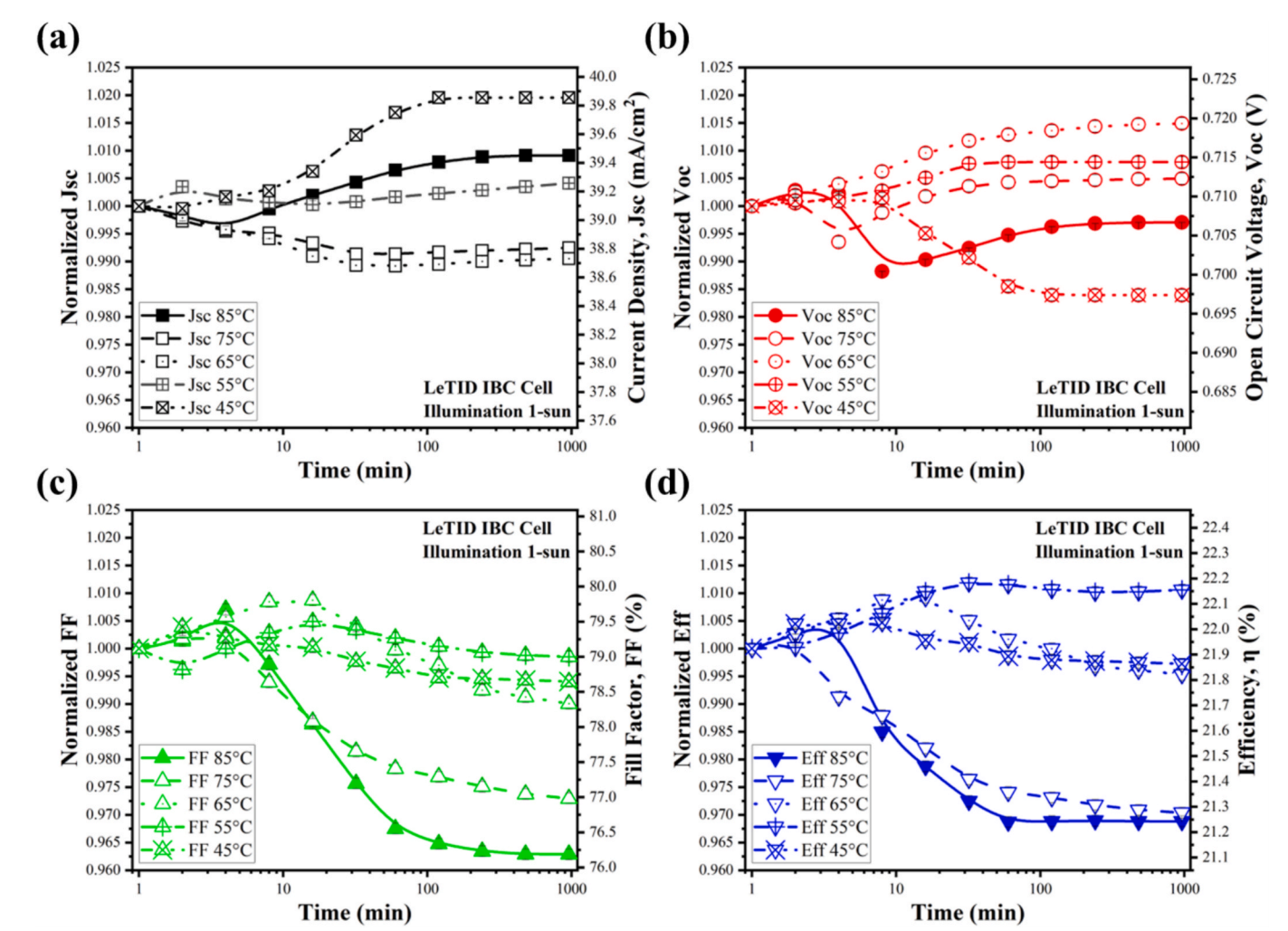

LeTID Kinetics

Fig. 5.png

LeTID degradation kinetics.

Steady-state measurements answer the question of “how much does heat affect performance,” while LeTID stress testing addresses “how does performance change with time.” At 85°C, Voc dropped rapidly during the first 10–30 minutes and then gradually approached a quasi-saturated level. Degradation was much slower at lower temperatures. After 960 minutes, Voc decreased to approximately 0.69 V, while Jsc remained within ±2% and FF fluctuated only slightly. No regeneration was observed within the experimental window.

Because measurements were performed at the stress temperature after thermal stabilization, the early voltage drop should be attributed to rapid activation of defect states rather than transient thermal equilibration. The stability of Jsc indicates that photogeneration and short-circuit extraction were not significantly affected, suggesting that the dominant loss was not generation-limited. The authors also noted a limitation: without a dark-annealing control experiment, the contribution of purely thermal effects cannot be completely excluded.
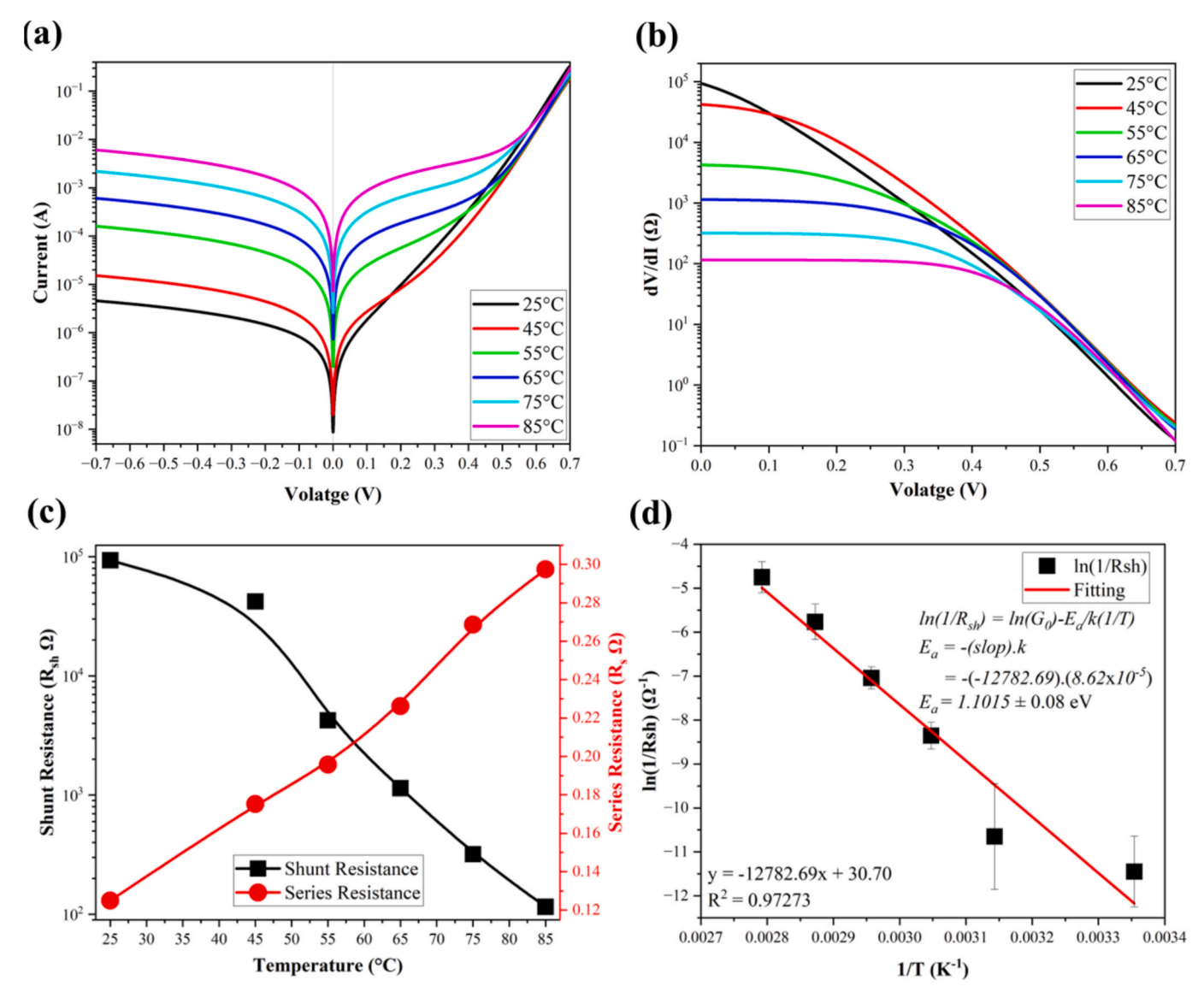

Dark-State Verification

Fig. 6.png

Dark-state electrical characteristics and leakage pathways: (a) dark J-V curves, (b) differential resistance, (c) extracted shunt and series resistance, and (d) Arrhenius analysis of shunt conductance, yielding Ea ≈ 1.10 eV.

Dark I-V measurements approach the same issue from a different perspective. Forward current increased significantly with temperature. The low-bias slope showed a clear decrease in shunt resistance, while the high-current region changed much less. This indicates that thermally induced resistance evolution was dominated by leakage activation rather than series-resistance degradation. The ideality factor remained at 1.05–1.25, indicating that diffusion recombination was dominant, with a possible contribution from Shockley–Read–Hall (SRH) recombination at higher temperatures.

Arrhenius analysis of shunt conductance showed good linearity between ln(1/Rsh) and 1/T (R² = 0.97), with an activation energy of 1.10 ± 0.08 eV. This is comparable to the silicon bandgap (approximately 1.12 eV) and falls within the LeTID range reported in the literature (0.8–1.2 eV). An activation energy on the order of the bandgap is often associated with defect-assisted conduction through deep-level defects, but a contribution from the intrinsic carrier concentration cannot be ruled out. Therefore, the result supports thermally activated leakage behavior but does not identify a specific defect species.


Unified Framework and Operating-Condition Extrapolation

The three lines of evidence can be described within a phenomenological framework:

J0(t, T) = J0,intr(T) + A·Ndef(t, T)

Where a thermally activated defect contribution that evolves with time and temperature is superimposed on the intrinsic saturation current. The resulting voltage loss can then be expressed as:

Voc = (nkT/q)·ln(Jsc/(J0 + 1))

Recombination enhancement and leakage activation occur within the same framework, linking the steady-state temperature coefficient, LeTID kinetics, and dark-state leakage evolution without assigning a specific defect identity. For outdoor operation, cell temperatures in modules under high irradiance are commonly in the 50–65°C range. Based on a temperature coefficient of −1.4 mV/K, operation at 60°C corresponds to an approximately 49 mV voltage loss relative to 25°C. Temperature-accelerated LeTID can further add time-dependent losses on top of this effect.

These extrapolations apply only to the cells tested in this study. For back-contact TOPCon and back-contact HJT cells, the findings serve only as qualitative references: degradation magnitude, activation energy, and regeneration kinetics depend on the respective passivating-contact architecture, interface quality, hydrogen distribution, and thermal stability, and require dedicated comparative studies. For high-efficiency back-contact devices operating in warm climates, voltage robustness and long-term energy yield ultimately depend on the stability of rear-side passivation and effective defect management.


Frequently Asked Questions (FAQ)

Q1: How does temperature affect the performance of n-type IBC solar cells?

As temperature increases from 25°C to 85°C, Voc decreases by approximately 1.4 mV/K, while Jsc increases only slightly. The efficiency decreases by about 9%, whereas FF remains nearly unchanged.

Q2: How does LeTID affect n-type IBC solar cells?

Under one-sun LeTID stress, Voc shows a rapid initial decline, particularly at 85°C, followed by a slower approach toward quasi-saturation. After 960 minutes, Voc decreased to approximately 0.69 V, while Jsc remained within ±2%.

Q3: What causes the temperature-dependent electrical degradation?

Dark I–V analysis indicates that temperature-induced degradation is mainly associated with thermally activated leakage, rather than series-resistance degradation. The extracted shunt-conductance activation energy was 1.10 ± 0.08 eV, supporting thermally activated leakage behavior.
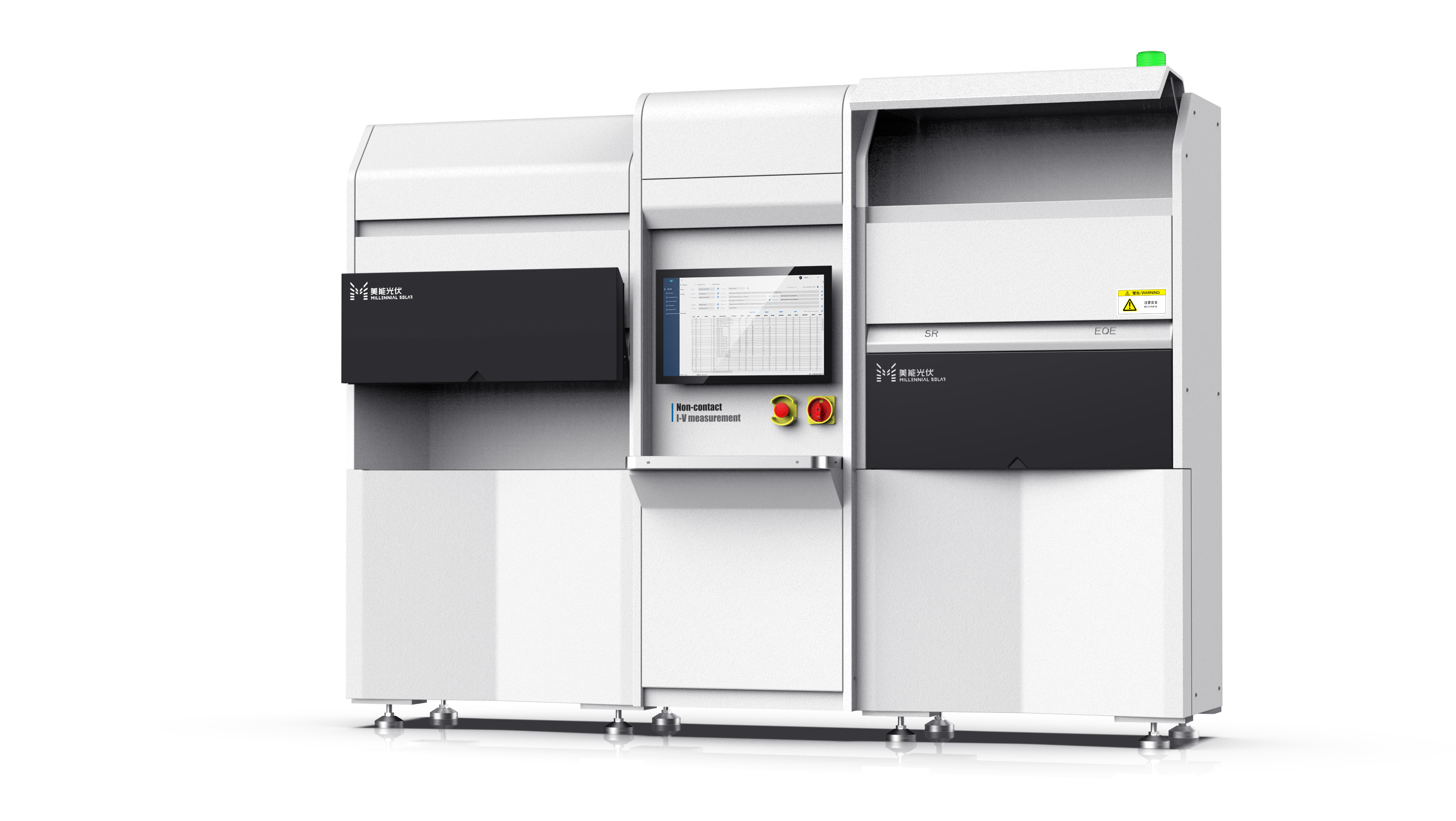

Millennial Solar Non-Contact IV Tester

非接触iv透明底(1).png

Contact: market@millennialsolar.com

With years of experience in photovoltaic testing, Millennial Solar combines mass-production experience with advances in academic research to provide a millisecond-level, non-destructive testing solution for crystalline-silicon solar cells across production lines.

· Millisecond-level measurement: Eliminates time-consuming mechanical movements, matches high-speed production lines, and enables substantially higher throughput.

· Zero physical contact: Suitable for advanced structures such as ultra-thin wafers, busbar-free cells, and BC cells, with no physical damage and no consumables.

· Broad compatibility: PERC / TOPCon / HJT / BC and more.

· Five-dimensional data acquisition: IV + EQE + SR + Re + PL.

Millennial Solar Non-contact IV Tester offers a non-contact approach to high-efficiency solar cell testing. Zero physical contact helps avoid microcrack and contamination risks associated with physical contact, while millisecond-level throughput is designed to match production-line takt time. High-precision measurement data provide a reliable basis for process optimization while reducing maintenance and consumable costs. This supports high-efficiency cell production without requiring the same trade-off between quality and testing efficiency.


Original reference: Temperature-dependent voltage degradation and LeTID kinetics in n-type interdigitated back contact (IBC) solar cells

*Statement: Original and reprinted articles published by this account are intended for academic sharing and the dissemination of industry-related information. Without authorization, copying, alteration, citation, or reproduction that infringes upon the relevant rights of this account is prohibited. The content is for reference only. If there is a copyright issue, please contact our company for removal.

Related Products

WhatsApp