


Non-contact IV tester

Quantum Efficiency Tester
PL/EL Integrated System
PV-Reflectumeter
3D Confocal Microscope
In-Line Four Point Probe Tester
Four Point Probe Tester
In-Line Thin Film Thickness Tester
Raman Spectrometer
FTIR Spectrometer
Spectrophotometer
Automatic Spectroscopic Ellipsometer
Contact Resistance Tester
Ultra depth of field 3D microscope
Auto Visual Tester
VMM PV Vision Measuring Machine
Solar Cell Horizontal Tensile Tester
Steady State Solar Simulator for Solar Cell
Solar Cell UV Aging Test Chamber
Solar Cell Comprehensive Tensile Tester
Visual Inspection Tester
Wet Leakage Current Tester
PV Module EL Tester
PV Module UV Preconditioning Chamber
Steady State Solar Simulator for PV Module
Current Continuous Monitor
Potential Induced Degradation Test
Bypass Diode Tester
LeTID Test System
Reverse Current Overload Tester
Impulse Voltage Tester
Hipot Insulation Tester
Ground Continuity Tester
Hipot Insulation Ground Tester
Damp Heat Test Chamber
Humidity Freeze Test
Thermal Cycle Test Chamber
Dynamic Mechanical Load Tester
Static Mechanical Load Tester
Hail Impact Tester
Robustness of Termination Tester
Module Breakage Tester
Cut Susceptibility Tester
Peel Shear Strength Tester
Universal Testing Machine (Single-arm)
Universal Testing Machine (Double-arm)
Glass Transmittance Tester
Acetic Acid Test Chamber
EVA Degree of Crosslinking Test System
Junction Box Comprehensive Tester
Drop ball tester
Semi-automatic scanning four-probe tester
Stylus Profilometer
Maximum Power Point Tracker
Perovskite Glass Transmittance Tester
Perovskite P1 Laser Scribing Multifunctional Testing Machine
Perovskite Online PL Tester
Perovskite Online Sheet Resistance Tester
Online Perovskite Film Thickness Tester
Perovskite Process Inspection Workstation
Portable EL Tester
Portable Thermal Imaging Tester
Solar Module Multi-Channel Testing System
PV Inverter Power Quality Tester
IV Tester
IVEL Cell Sorting Machine
Primary Materials and Manufacturing Processes for Photovoltaic Modules
Date : 12 September 2025Views : 2660
Photovoltaic modules, also known as solar panels, consist of multiple solar cells of identical size and quantity. Within photovoltaic systems, these modules typically comprise silicon wafers, glass, EVA laminate, and backsheets. Silicon wafers serve as the core material of photovoltaic modules, accounting for approximately 90% of the total module cost, thus demanding high quality standards. Glass and EVA film each contribute about 10% to the total cost, significantly impacting the module's performance and lifespan.
Photovoltaic modules find extensive applications across various sectors, including residential lighting, electric vehicles, communication base stations, and solar-powered agricultural greenhouses.
Primary Materials of Photovoltaic Modules
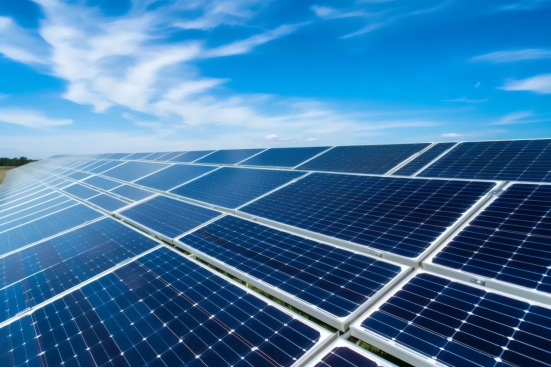
Solar Cells
The core component of photovoltaic modules, typically made from high-purity monocrystalline or polycrystalline silicon. Through processes like doping and junction formation, they create PN junctions responsible for converting solar energy into electricity.
Tin-Coated Copper Ribbon (Photovoltaic Busbar)
Used to connect solar cells, serving as a conductor and current collector.
EVA
A copolymer of ethylene and vinyl acetate, serving as the encapsulation film. It bonds the cell, glass, and backsheet while protecting the cell's electrical properties.
Backsheet
Protects the rear surface of the PV module against environmental corrosion, such as humidity and heat, while enhancing light absorption efficiency and insulation performance.
Tempered Glass
Serves as the structural support for photovoltaic modules, enhancing load-bearing capacity while offering high light transmittance and effective water/gas barrier properties.
Silicone Sealant
Used for bonding and sealing photovoltaic modules, enhancing UV resistance.
Aluminum Alloy Frame
Protects the glass edges, enhances the module's sealing performance and mechanical strength, and facilitates installation and transportation.
Junction Box
Contains the connectors for the solar panel, used to direct electrical energy to external devices.
These materials collectively form the fundamental architecture of photovoltaic modules, ensuring the efficient operation and long-term stability of solar panels.
Analysis of Photovoltaic Module Manufacturing Process Steps
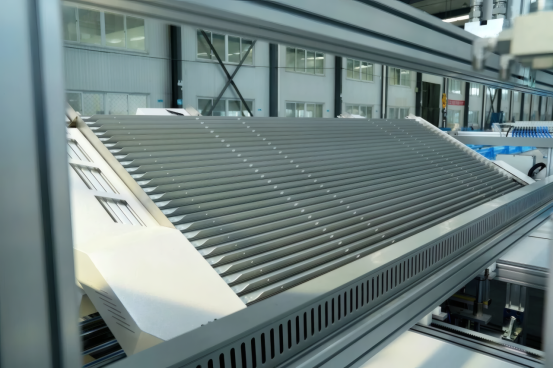
Silicon Wafer Preparation
The core material for photovoltaic modules is silicon wafers, which include both monocrystalline and polycrystalline silicon.
Cell Fabrication
Silicon wafers undergo processing into photovoltaic cells through foundational steps including cleaning, cutting, etching, diffusion, and deposition. The critical step is the diffusion process, which forms the PN junction structure.
Module Encapsulation
Pre-treated stacked layers undergo surface impurity removal and interlayer adhesion inspection; then sent to a laminator where EVA adhesive film melts under high temperature (approx. 130-150°C) and pressure, fully filling gaps and bonding layers. After lamination, modules enter a curing oven for temperature stabilization, allowing EVA to fully cross-link and solidify into a stable monolithic structure while ensuring sealing integrity and weather resistance.
Cell Testing and Sorting
Classify cells based on performance parameters to optimize utilization rates.
Front Side Soldering
Solder busbars (tin-plated copper strips) to the front main grid lines of each cell, preparing for series connection.
Back Side Series Connection
Use a soldering iron and solder wire to sequentially connect cells in series, forming module strings, and solder lead wires.
Lamination Layup
Arrange the strung cells, glass, EVA, glass fiber, and backsheet in specific layers for lamination preparation.
Framing and Inspection
After trimming and framing (including junction box installation), inspect the solar module for anomalies like microcracks, fragments, cold solder joints, or open circuits. Conduct power and visual tests; ship only qualified modules.
These process steps ensure the quality and performance of photovoltaic modules, enabling efficient conversion of solar energy into electricity.


