


Non-contact IV tester

Quantum Efficiency Tester
PL/EL Integrated System
PV-Reflectumeter
3D Confocal Microscope
In-Line Four Point Probe Tester
Four Point Probe Tester
In-Line Thin Film Thickness Tester
Raman Spectrometer
FTIR Spectrometer
Spectrophotometer
Automatic Spectroscopic Ellipsometer
Contact Resistance Tester
Ultra depth of field 3D microscope
Auto Visual Tester
VMM PV Vision Measuring Machine
Solar Cell Horizontal Tensile Tester
Steady State Solar Simulator for Solar Cell
Solar Cell UV Aging Test Chamber
Solar Cell Comprehensive Tensile Tester
Visual Inspection Tester
Wet Leakage Current Tester
PV Module EL Tester
PV Module UV Preconditioning Chamber
Steady State Solar Simulator for PV Module
Current Continuous Monitor
Potential Induced Degradation Test
Bypass Diode Tester
LeTID Test System
Reverse Current Overload Tester
Impulse Voltage Tester
Hipot Insulation Tester
Ground Continuity Tester
Hipot Insulation Ground Tester
Damp Heat Test Chamber
Humidity Freeze Test
Thermal Cycle Test Chamber
Dynamic Mechanical Load Tester
Static Mechanical Load Tester
Hail Impact Tester
Robustness of Termination Tester
Module Breakage Tester
Cut Susceptibility Tester
Peel Shear Strength Tester
Universal Testing Machine (Single-arm)
Universal Testing Machine (Double-arm)
Glass Transmittance Tester
Acetic Acid Test Chamber
EVA Degree of Crosslinking Test System
Junction Box Comprehensive Tester
Drop ball tester
Semi-automatic scanning four-probe tester
Stylus Profilometer
Maximum Power Point Tracker
Perovskite Glass Transmittance Tester
Perovskite P1 Laser Scribing Multifunctional Testing Machine
Perovskite Online PL Tester
Perovskite Online Sheet Resistance Tester
Online Perovskite Film Thickness Tester
Perovskite Process Inspection Workstation
Portable EL Tester
Portable Thermal Imaging Tester
Solar Module Multi-Channel Testing System
PV Inverter Power Quality Tester
IV Tester
IVEL Cell Sorting Machine
Choices for Space Applications: P-Type Crystalline Silicon Cells
Date : 2 February 2026Views : 1345
In terrestrial photovoltaic applications, N-type cells (such as TOPCon, HJT, and BC) have replaced traditional P-type cells as the mainstream technology due to their higher conversion efficiency and lower degradation rates. However, when we turn our gaze to the vast expanse of space, the situation is entirely different—in the vast majority of spacecraft, P-type crystalline silicon cells remain the undisputed mainstay. This “divergence between Earth and space” isn't due to technological lag, but rather an optimized strategic choice made based on the extreme uniqueness of the space environment—balancing reliability, radiation resistance, and overall cost.
I. The Physical Essence of P-Type and N-Type Cells
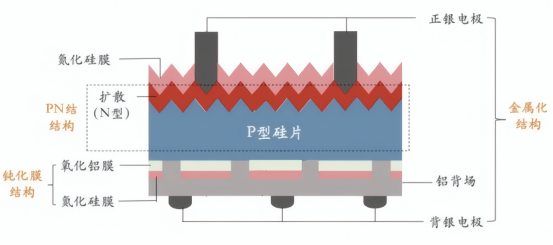
P-type crystalline silicon solar cell
1. P-Type Crystalline Silicon Cells: Boron (B)-doped P-type silicon serves as the substrate, forming the P-type body. Phosphorus (P) diffusion creates an N-type layer on the surface, forming a P-N junction. Its core characteristics are:
a. Majority carriers are holes.
b. Key lifetime parameter: Minority carrier (electron) lifetime. Cell efficiency largely depends on the diffusion length of minority carriers (electrons) in the P-type base region.
2. N-type crystalline silicon solar cell: Utilizes phosphorus (P)-doped N-type silicon as the substrate to form the N-type body. A P-type layer is created on the surface through boron (B) diffusion or other methods, forming a P-N junction. Its core characteristics are:
a. The majority carriers are electrons.
b. Key lifetime parameter: Minority carrier (hole) lifetime. Typically, the bulk lifetime of N-type silicon is significantly higher than that of P-type silicon due to its lower sensitivity to common metallic impurities (e.g., iron).
From the perspective of intrinsic material properties, N-type silicon possesses inherent advantages: higher carrier lifetime and reduced sensitivity to impurities. These characteristics form the theoretical basis for achieving higher efficiency in ground-based applications.
II. Mechanisms of Space Radiation Damage and Their Impact on Cell Performance
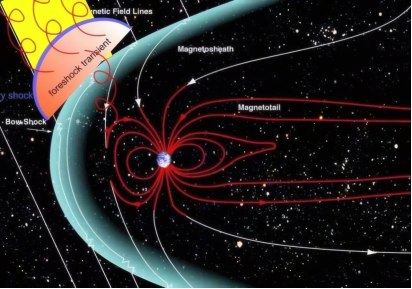
High-energy charged particles in space
Irradiation by high-energy charged particles in space (primarily electrons and protons) is a key factor affecting solar cell performance. This radiation induces lattice displacement damage, generating defects such as vacancies, interstitial atoms, and their complexes. These defects become carrier recombination centers, leading to reduced minority carrier lifetime (τ) and diffusion length (L), ultimately manifesting as a decline in the cell's maximum power output (Pmax).
Mechanisms Underlying Radiation Resistance Differences Between P-Type and N-Type Cells
Radiation-induced defects exhibit significant differences in capture cross-sections for electrons and holes, forming the physical basis for the divergent radiation resistance of these two cell types.
1. Sensitivity of Defect Energy Levels to Minority Carrier Type
Major radiation-induced defects in silicon (e.g., boron-oxygen complexes, vacancy-associated complexes) introduce energy levels within the bandgap that exhibit high capture efficiency for minority carriers. In p-type cells, where electrons serve as minority carriers, key radiation defects (e.g., phosphorus-vacancy complexes) possess smaller capture cross-sections for electrons, resulting in relatively slower electron lifetime decay post-irradiation. In n-type cells, however, minority carriers are holes. Most radiation defects (particularly boron-related defects) exhibit extremely large capture cross-sections for holes, leading to a sharp decline in hole lifetime after irradiation.
2. Damage Amplification Effect of Doping Agents
Boron-10 isotopes in p-type silicon undergo nuclear reactions when bombarded by high-energy particles, generating secondary displacement damage that accelerates performance degradation—the “boron damage amplification effect.” Although boron is also used in the P+ emitter of N-type cells, its base region boron concentration is significantly lower than in P-type cells, making it less susceptible to this effect. However, in long-term space radiation environments, the differing sensitivity of minority carriers to defects becomes the dominant factor.
Under identical irradiation doses, N-type cells struggle to maintain their initial efficiency advantage due to rapid hole lifetime decay. P-type cells, benefiting from relatively stable electron lifetime, exhibit a flatter degradation curve and superior power retention rates at mission end. For long-duration space missions, the predictability and stability of power output hold greater engineering value than initial efficiency levels.
III. Reliability in Engineering Practice
P-type space solar cells have established a mature radiation-hardening technology system. By substituting boron with gallium to mitigate damage enhancement effects, employing shallow junction designs to reduce carrier recombination probability, and integrating backfield and passivation processes to enhance radiation tolerance, these techniques have demonstrated high reliability and predictable performance through long-term in-orbit validation.
Although N-type cells possess theoretical advantages such as no light-induced degradation, their space applications still face challenges: radiation degradation models are more complex, and long-term performance prediction confidence is relatively low; the high-temperature resistance and packaging compatibility of certain technical routes (such as heterojunction cells) still require verification. In the risk-sensitive aerospace field, their technical maturity and accumulated in-orbit data still lag significantly behind P-type cells.
IV. System Trade-offs Centered on Reliability
The selection of solar cells for space missions follows a systems engineering logic prioritizing reliability:
• Top-level considerations are mission success and reliability. P-type cells provide long-term validated, predictable degradation curves, ensuring energy security throughout the entire mission lifecycle.
• Intermediate level: End-of-life power output and radiation resistance. P-type cells exhibit gradual degradation, typically delivering more stable power output during mission end-of-life compared to equivalent N-type cells.
• Foundational level: Initial efficiency, weight, and cost. The weight reduction advantage from N-type cells' higher initial efficiency often fails to offset their reliability risks. The mature P-type cell supply chain also offers superior cost and supply stability.
In summary, the selection of P-type cells for space applications is an inevitable manifestation of fundamental semiconductor physics principles under extreme space environments: The Achilles' heel of N-type cells lies in their minority carriers—holes—which are highly sensitive to defects induced by space radiation, leading to rapid performance degradation. Conversely, P-type cells leverage the relatively robust “resilience” of their minority carriers (electrons) and are supported by a highly mature, radiation-hardened manufacturing process. This combination delivers unparalleled power output stability and mission success assurance during extended space operations.


